4 mins read
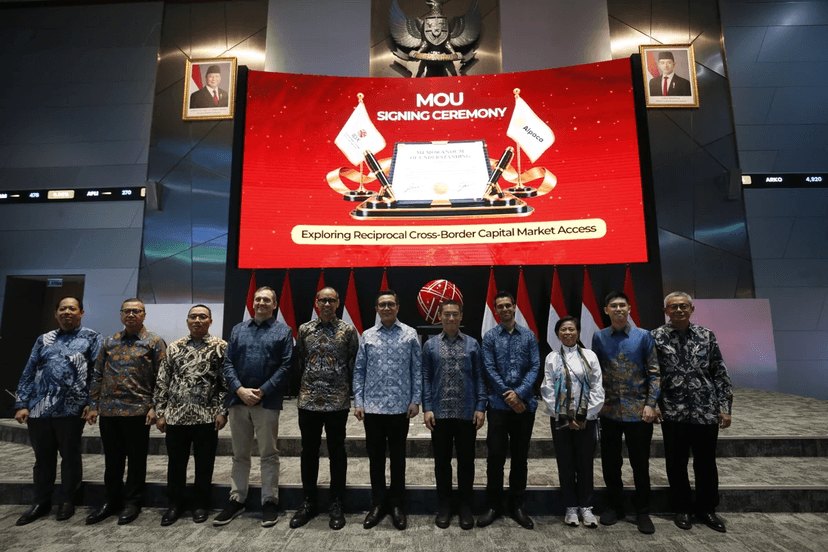
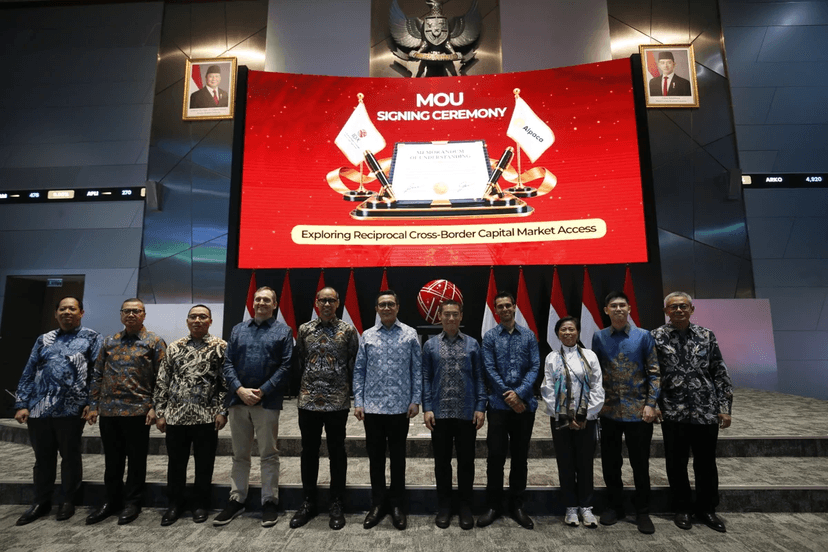
Alpaca Kalshi partnership terms went public on August 31, adding prediction markets to Alpaca’s brokerage infrastructure through the exchange that built the category. The deal lets developers and financial platforms already running on Alpaca’s API offer CFTC-regulated event contracts alongside the stocks, options, fixed income and crypto they support, without a separate account or vendor relationship.
How the Alpaca Kalshi Partnership Splits the Work
The Alpaca Kalshi partnership mechanics divide cleanly. Alpaca Derivatives LLC handles custody, money movement, statements and account management. Kalshi supplies the regulated marketplace, the event contracts and clearing. Partners get the same order, position, activity and market data interfaces extended to cover contracts across economic indicators, financial markets, weather, sports and cultural events, rather than a new integration.
Timing is tighter than it looks. Alpaca Derivatives registered with the CFTC as a Futures Commission Merchant and joined the National Futures Association only in mid-August, roughly two weeks before this announcement. So the Alpaca Kalshi partnership is not the culmination of a long regulatory build. It is the next step in one still underway, and availability stays subject to regulatory approval market by market.
The Numbers Behind the Alpaca Kalshi Partnership
Kalshi’s trajectory explains why the Alpaca Kalshi partnership exists at all. The exchange reports more than $40 billion of trading volume in July alone, on its own data. In May it raised $1 billion at a $22 billion valuation in a Series F led by Coatue, with Sequoia, Andreessen Horowitz, Morgan Stanley and ARK Invest participating. That doubled an $11 billion mark set five months earlier.
The operating figures behind it are the persuasive part. Kalshi says annualised trading volume tripled from $52 billion to $178 billion in six months, institutional volume rose 800% over the same period, and annualised revenue passed $1.5 billion across roughly 2 million monthly users. It claims above 90% of US prediction market activity. Bernstein projects sector volumes reaching $240 billion this year, a 370% jump on 2025, and $1 trillion by 2030 at roughly 80% compound growth.
Alpaca brings distribution rather than volume. Its infrastructure reaches about 14 million brokerage accounts across more than 300 financial institutions, mostly white-labelled under partner brands, with an API serving around 83,000 monthly developers.
Fintechbits analysis
Why the Alpaca Kalshi Partnership Joins a Crowded Race
Here the Alpaca Kalshi partnership framing deserves correcting. This is not a lone infrastructure provider deciding to back a contested product category while peers sit it out. It is a race already running. Apex has launched an API letting brokers offer Kalshi contracts without building FCM infrastructure. DriveWealth announced its own Kalshi integration back in February. Leverate and Devexperts supply white-label front ends. Kalshi reached Canada through Wealthsimple in June, and Coinbase, Robinhood and DraftKings have all expanded exposure to the category.
Alpaca does differ in one structural respect worth understanding. It registered its own FCM subsidiary rather than connecting partners to a third party’s. That means more regulatory surface area carried directly, more control over the stack, and no dependency on another intermediary’s risk appetite. Whether that proves an advantage or an expensive detour depends on how cleanly it runs a book it has not yet run.
Event contracts also carry more legal ambiguity than a listed equity, with state-level challenges to the category continuing alongside federal registration. A regulated wrapper does not settle every question about where these products may be offered.
What the Alpaca Kalshi Partnership Has to Prove
Chief Brokerage Officer Tony Lee attributed the move to partner demand for more asset classes through a single integration. That is believable and self-serving in equal measure, which is the standing problem with vendor demand claims. The durable signal is Kalshi’s volume growth, which needs no help from Alpaca to be real.
The open Alpaca Kalshi partnership question is distribution economics. Fourteen million accounts is a headline, not a forecast, because those accounts sit inside partner platforms that each decide independently whether event contracts belong next to a retirement portfolio. Demand may concentrate in a narrow set of trading-native apps rather than spreading across the base. A neobroker serving passive investors has little reason to surface weather contracts.
So watch which named platforms really do enable event contracts, and how quickly, once Alpaca publishes launch detail. Watch too whether Alpaca’s own FCM handles its first live book without incident, because the agent-first infrastructure argument only works if the regulated plumbing underneath it does. The Alpaca Kalshi partnership is a credible bet on a category with genuine momentum. It is also a late entry into a contested lane, built on a licence roughly a fortnight old.
Fintechbits covers brokerage infrastructure, prediction markets and trading technology. Nothing here constitutes financial or investment advice. All analysis represents the editorial views of Fintechbits.