4 mins read
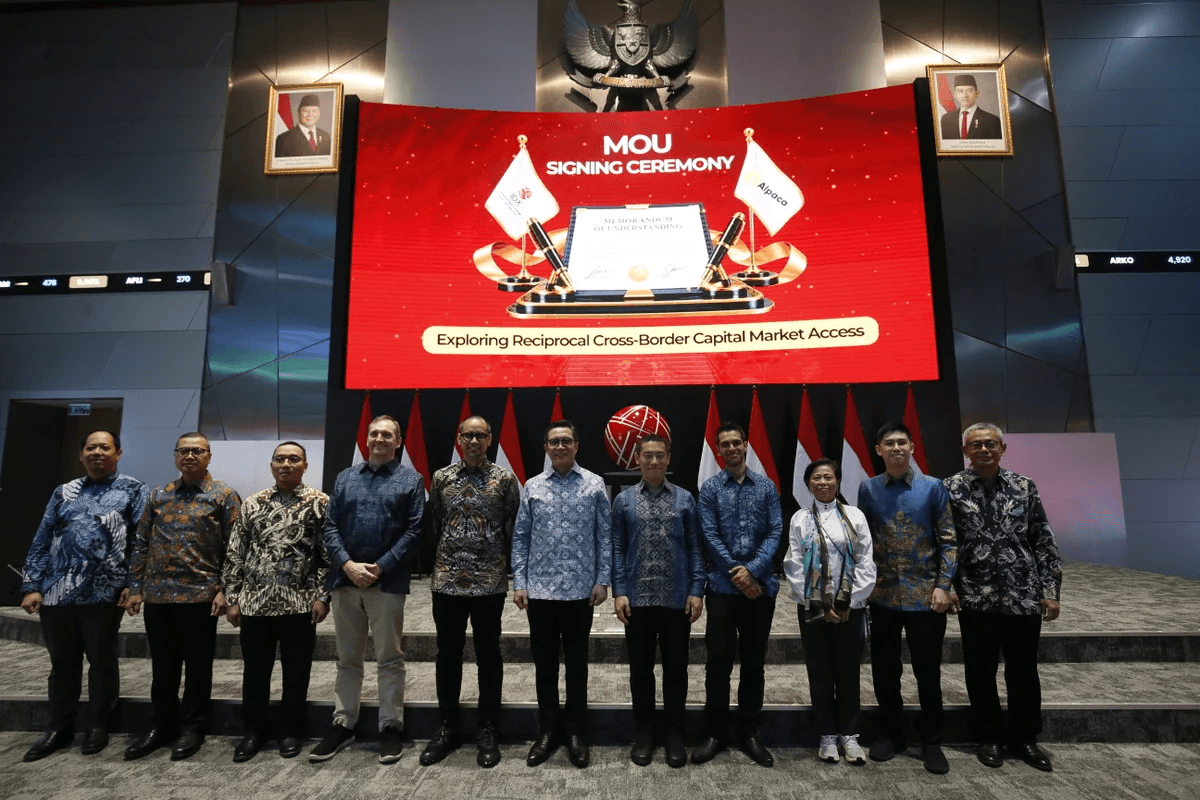
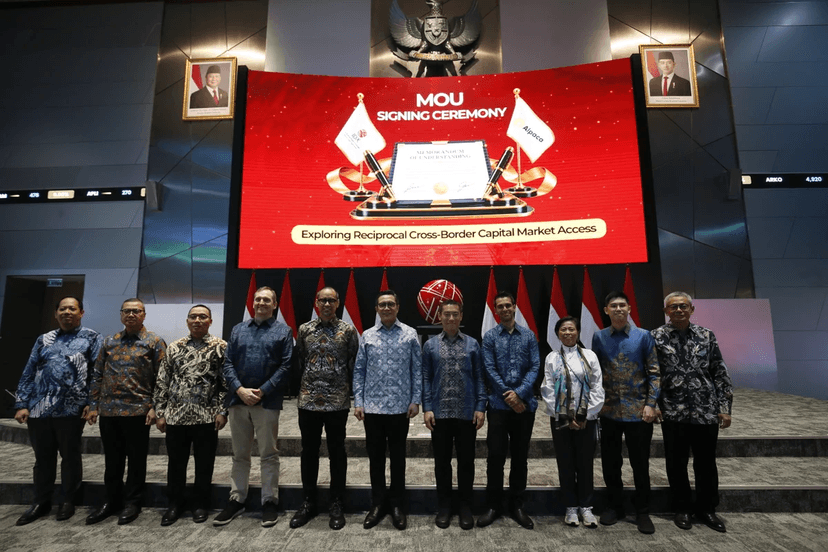
Alpaca Indonesia ambitions took a formal step on 1 September, when the brokerage infrastructure company signed an agreement with the Indonesia Stock Exchange at the IDX Main Hall in Jakarta. Yoshi Yokokawa, Alpaca co-founder and chief executive, signed alongside IDX President Director Jeffrey Hendrik.
What the Alpaca Indonesia Agreement Really Commits To
Read the Alpaca Indonesia language carefully, because it is doing less than the headlines suggest. The parties will explore a framework that would enable Indonesian broker members to offer customers access to US and other foreign securities using Alpaca execution, clearing and custody. Hendrik described it as a memorandum of understanding establishing a framework to explore reciprocal access.
So this is an agreement to investigate an arrangement, not an arrangement. No product exists, no timeline is published, and nothing obliges either party to ship. That does not make it meaningless, since exchanges do not stage signing ceremonies for ideas they intend to drop, but the Alpaca Indonesia deal is a starting point rather than a launch.
How PALN Makes the Alpaca Indonesia Deal Work
The mechanism is Penyaluran Amanat Luar Negeri, or PALN, which permits Indonesian brokers to route client orders into securities traded on overseas exchanges. Local brokers keep their own brand and their supervision by the Financial Services Authority, Otoritas Jasa Keuangan, while the foreign leg of the trade runs on someone else’s rails.
That division of labour is the entire commercial logic. Building direct custodial relationships with US clearing infrastructure from Jakarta is a heavy lift for a mid-sized local broker. Routing through a counterparty that already holds those relationships is not. Alpaca has built its business as an infrastructure layer rather than a consumer brand, so the Alpaca Indonesia arrangement lets member brokers offer something they would struggle to build alone.
One correction to the common framing. This is not Alpaca gaining a foothold in a new market. The company already works with Ajaib, Gotrade, Nanovest, PT Valbury Asia Futures and Reku. Five Indonesian clients are already live. The IDX agreement deepens a position rather than establishing one, and those five are the obvious candidates to ship first.
Fintechbits analysis
Why the Alpaca Indonesia Deal Runs Both Ways
The reciprocal leg of the Alpaca Indonesia deal gets almost no coverage and explains more than the outbound one. Alongside taking Indonesian investors offshore, the parties will explore facilitating access for international brokers and market participants into Indonesian capital markets.
That reframes IDX’s motive. An exchange does not primarily sign this to help its members send order flow abroad, which drains domestic liquidity. It signs it hoping the same pipe carries foreign capital into Indonesian listings. Hendrik’s own framing was reciprocal access across jurisdictions, and Yokokawa spoke of bringing Indonesia’s capital markets closer to international investors as well as the reverse.
Emerging-market exchanges increasingly treat cross-border retail access as a competitive necessity, since local investors want exposure to global equities their domestic market cannot supply. Losing those investors to unregulated offshore apps is worse than routing them through supervised local platforms. Partnering with a vendor rather than building in-house suggests IDX values speed over owning the stack.
What the Alpaca Indonesia Deal Has to Prove
The Alpaca Indonesia playbook matches the one Alpaca ran with Kalshi on prediction markets. Rather than build a product for end users, sell the plumbing to platforms that already have the users and let them decide whether to surface it. It is a coherent strategy, and it makes the retail investing partner the one that determines whether anything reaches a customer.
Two things are worth tracking. Which of the five existing Indonesian partners announces live PALN access first, and how long the gap runs between a signed memorandum and a shipped product. Cross-border retail access also has to clear regulatory approval on both sides, and OJK has its own view on how Indonesian retail money reaches foreign markets. A signing photograph in the IDX Main Hall is not that approval.
Fintechbits covers brokerage infrastructure, cross-border investing and capital markets technology. Nothing here constitutes financial or investment advice. All analysis represents the editorial views of Fintechbits.