5 mins read

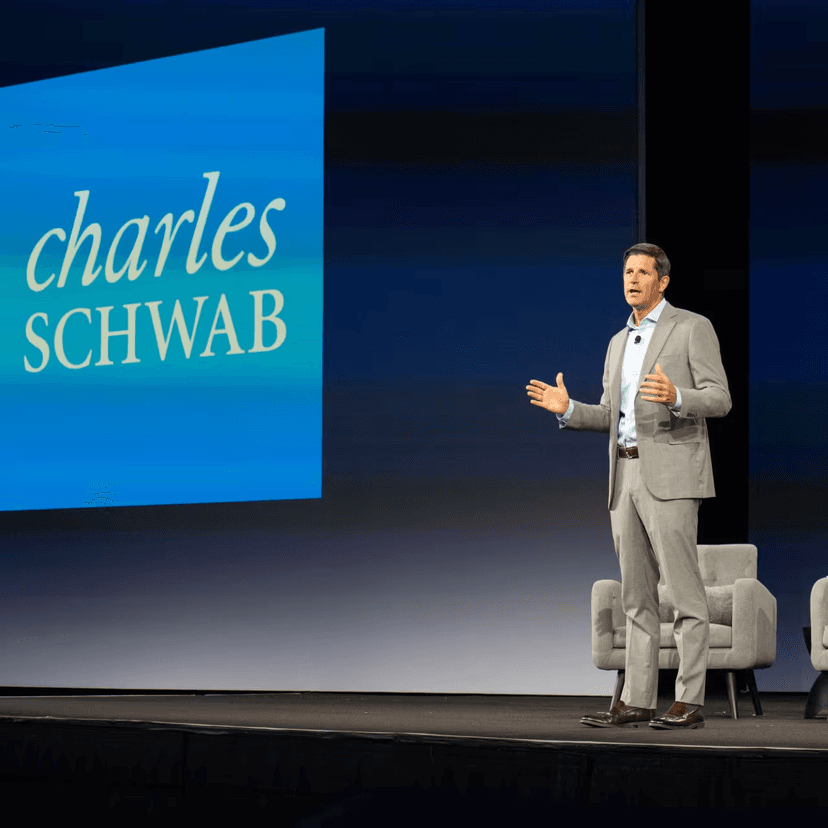
Schwab Crypto launch day arrived on July 21, 2026, packaged inside record second-quarter results from the Westlake, Texas brokerage. Net revenue rose 21 percent to $7.1 billion, adjusted earnings per share climbed 42 percent to $1.62, and GAAP earnings landed at $1.54 on net income of $2.8 billion. Retail clients now get direct Bitcoin and Ethereum trading.
The Numbers Around the Schwab Crypto Launch
The quarter surrounding the Schwab Crypto launch is difficult to fault on fundamentals. Core net new assets reached $119.8 billion, up 49 percent, with June alone contributing a record $62.7 billion. Schwab added 1.4 million brokerage accounts, bringing total client accounts to 48 million and client assets to $13.08 trillion.
Daily average trades hit a record 11.9 million, up 57 percent, pushing trading revenue up 28 percent to $1.2 billion. Bank loans grew 33 percent to $67.0 billion and margin loans jumped 30 percent sequentially to $165.1 billion, indicating clients borrowing harder against portfolios as markets climbed. Schwab also repurchased 11.2 million shares for $1.0 billion and lifted full-year revenue guidance to growth of 17.5 to 18.5 percent, well above the 14 to 15 percent set at its May investor day.
The Market Reaction the Schwab Crypto Launch Did Not Fix
Here is the fact missing from most coverage. Schwab shares closed down 2.5 percent that day.
A record quarter, a beat on both lines, and raised guidance produced a decline, because the stock had already run roughly 11.8 percent over the prior month and the beat was modest against elevated expectations. Adjusted earnings came in a few cents above consensus on revenue barely ahead of forecasts. So the Schwab Crypto launch and the earnings beat together were not enough to move a stock that had priced the good news in advance. That is worth holding alongside any read that the numbers were unambiguously strong. On fundamentals they were. On expectations they were not.
Chief executive Rick Wurster argued on the call that elevated trading is structural rather than cyclical, citing young investors and AI as “leading towards a more sustained period of high levels of trading.” A 57 percent jump in daily trades during a rising market is also exactly what cyclicality looks like, so that claim gets tested in the next drawdown rather than this quarter.
Fintechbits analysis
Why the Schwab Crypto Launch Is Not Competing on Price
The Schwab Crypto launch timing is the story, and the pricing explains the strategy. Schwab arrives years behind Robinhood, Coinbase, and PayPal on retail crypto, having signaled interest through custody and index products while holding off on direct trading. This reads like a firm waiting until the risk and compliance picture settled rather than one chasing a trend.
Each Schwab Crypto transaction carries a 0.75 percent fee. That is not a number designed to win active traders away from platforms competing on cost, and it clarifies who the product targets. The Schwab Crypto launch is aimed at existing clients who want a modest digital asset allocation without opening an account somewhere else, and who will pay for the convenience of holding it beside everything else. Convenience monetization, not price competition.
The Product Beside the Schwab Crypto Launch That Matters More
Portfolio Insights, the generative AI summary tool, is table stakes. Every major brokerage has shipped a version over the past two years, and a feature that explains portfolio performance in plain language differentiates nobody at this point. Comparable AI companions have been standard on retail platforms for a while.
The genuinely novel item went almost unmentioned. Schwab is working with Cboe Global Markets to launch binary options tied to financial and economic events. Event contracts are a contested and fast-moving category where regulatory treatment remains unsettled, and a firm of Schwab’s size and conservatism entering it is a more interesting signal than either crypto or AI summaries. On crypto Schwab is a cycle late. On event contracts it would be unusually early.
The Honest Read on the Schwab Crypto Launch
Set the Schwab Crypto launch aside and the asset gathering is real, with the integration overhang cleared. Schwab believes it can convert crypto-curious clients through an existing trusted relationship without cannibalizing the core business those clients came for, and at a 0.75 percent fee it does not need volume to make that work.
The open question is whether anyone already trading on Coinbase or Robinhood has a reason to move. Probably not on price, and probably not on features, since two assets is a narrow menu. The plausible win is the client who never opened a crypto account at all and now finds one inside the brokerage they already use. That is a smaller market than crypto trading overall and a stickier one.
What to Watch After the Schwab Crypto Launch
Whether Schwab breaks out crypto volume next quarter or folds it into daily average trades is worth watching, though volume may be the wrong metric entirely. At 0.75 percent per transaction, Schwab is not courting high-frequency crypto activity. The number that would reveal whether the strategy works is crypto holdings inside client asset totals, since the thesis is allocation rather than trading.
Watch the Cboe event-contracts work more closely still. If that launches and draws volume, Schwab will have entered a genuinely new category at the front rather than the back of the queue, which would say more about the firm’s risk appetite in 2027 than a late crypto launch says about it in 2026. And watch the trading line in the next flat or falling quarter, because Wurster’s structural claim is testable and this quarter cannot test it.
Sources: results are published by Schwab, the market reaction and fee detail were reported by Quartz, and analyst context comes from ChartMill.
Fintechbits covers retail brokerage, digital assets, and capital markets infrastructure. Nothing here constitutes financial or investment advice. All analysis represents the editorial views of Fintechbits.