5 mins read

Cordant payments observability came out of stealth on July 21, 2026 with $8 million in seed funding co-led by Motive Partners and Oak HC/FT. The New York company gives banks, fintechs, and payments firms a single view across transaction flows, control gaps, and exceptions. Bitso and Paxos joined as both investors and design partners.
What the Cordant Payments Observability Platform Does
The platform ingests signals from payment rails, bank accounts, ledgers, and compliance and risk systems, normalizing them into a shared event model. It detects control gaps and contradictions, coordinates exception workflows, and produces audit-grade evidence of how a transaction moved, who acted, and which controls applied.
Three things it does not do matter as much. Cordant does not move or hold funds, does not replace core systems, and does not require institutions to centralize their data. The full investor list beyond the co-leads runs to Bankless VC, FJ Labs, SignalFire, Quona, Next Stage, Selah Ventures, Flatironx, Nascent Ventures, Silvercircle Ventures, and Generative Ventures.
The Cordant Payments Observability Pitch Has Two Drivers
The AI framing is the one getting quoted. Chief executive and co-founder Eric Rosenthal argues that “institutions cannot automate responsibly if they cannot see or explain it,” positioning context as a prerequisite for automation. That ties the sale to something executives are already anxious about rather than asking them to buy abstract visibility on faith.
There is a second driver worth separating out, because it survives whether or not the AI cycle holds. Regulated institutions already owe documented audit trails and control evidence to their supervisors. Cordant payments observability produces exactly that artifact as a byproduct. A product whose value depends on the AI narrative is fragile. A product that also satisfies a standing compliance requirement is considerably less so, and the release makes both cases.
The Rapyd Revenue Claim Behind Cordant Payments Observability
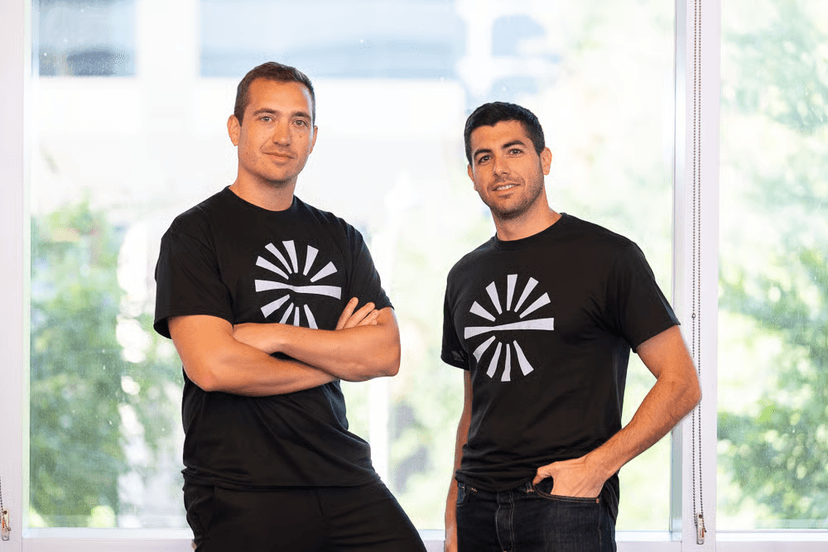
The founding team is Eric Rosenthal, Lior Levitt, Sagi Ittah, and Juan Jose Huezo, who led commercial strategy, product, engineering, sales, and partner engineering at Rapyd. That pedigree is genuine and directly relevant to the problem.
One figure needs handling with care. The claim that Rapyd scaled beyond $1 billion in revenue across 50-plus countries originates in Cordant’s own announcement and has been repeated by its investors and the trade press. Rapyd is private and does not publish financials, so no independent confirmation exists. Payments companies also frequently report gross revenue inclusive of pass-through interchange and scheme fees, which is a very different figure from net. Treat it as a company statement rather than an established fact.
Cordant Payments Observability Is Not in Production Yet
Here is the detail that reframes the whole announcement. The release states the funding will be used to bring the system into production and activate its private beta clients. The Cordant payments observability platform is pre-production.
So the gap is wider than design partners simply not paying. Eleven institutions are helping design something that has not yet run live in their environments. Eight million dollars is a small round by financial infrastructure standards, and on the merits of capital alone this would not warrant coverage. What earns attention is the roster: Motive Partners and Oak HC/FT are credible payments investors, and design partners who also write checks tend to engage more seriously than those testing something free.
Fintechbits analysis
Why the Trust Objection to Cordant Payments Observability Is Softer Than It Looks
The intuitive worry is that regulated banks will not hand a startup production access to transaction data. That worry is reasonable about timelines and wrong about the architecture.
Cordant explicitly does not require centralizing data, and the design partners are describing that constraint in their own words. Dave Schwed of OpenReserve framed the goal as resolving issues without expanding who can touch production, built on permissioned views across systems. Chris Fuller, president of Transcard, described the need as continuously proving payment programs operate within their obligations. Imran Ahmad, chief operating officer at Bitso, called it a coordination layer between separate systems of record. Cordant payments observability was designed around the objection rather than in spite of it. Regulated institutions will still move slowly, and slow adoption remains the real risk.
What to Watch on Cordant Payments Observability Next
Conversion from design partner to paying customer is the right thing to track, though two quarters is aggressive for a platform still moving into production. The honest first milestone is narrower: whether the private beta clients go live in production environments at all. Paid conversion follows that, not the other way around.
One refinement makes the conversion metric far more informative. Bitso and Paxos hold equity, so their continued participation proves very little about product quality. Both have reasons to stay engaged regardless. The signal sits with the other nine design partners spanning banking, embedded finance, cross-border transfers, and stablecoin infrastructure, who have no such incentive. If arms-length institutions convert to production and then to paid, Cordant payments observability has a business. If only the investor-partners stay, this was a well-connected pilot program with a good founding story attached.
Sources: the announcement is on BusinessWire, the investment thesis is set out by Oak HC/FT, and additional coverage came from CTech.
Fintechbits covers payments infrastructure, financial data platforms, and fintech venture funding. Nothing here constitutes financial or investment advice. All analysis represents the editorial views of Fintechbits.