4 mins read
Savvy Wealth has closed a $100 million Series C led by Halo Fund, the growth vehicle co-founded by Qualtrics founder Ryan Smith and longtime Accel partner Ryan Sweeney. The round values the company at $600 million and pushes total funding past $200 million.
Inside the Savvy Wealth Series C
Note who else is on the cap table. Thrive Capital, Industry Ventures from Goldman Sachs, Canvas Prime, Index Ventures, House Fund, Euclidean Capital, Alumni Ventures and Vestigo Ventures all joined. Crucially, every one is an existing backer re-upping rather than a new outside validator.
The growth numbers are real and verified. Savvy Wealth is on pace to pass $100 million in annual recurring revenue. It now supports more than 150 advisors, twice its count a year ago, overseeing roughly $9 billion in assets. That is more than four times last year, with over $4 billion recruited during 2026 alone.
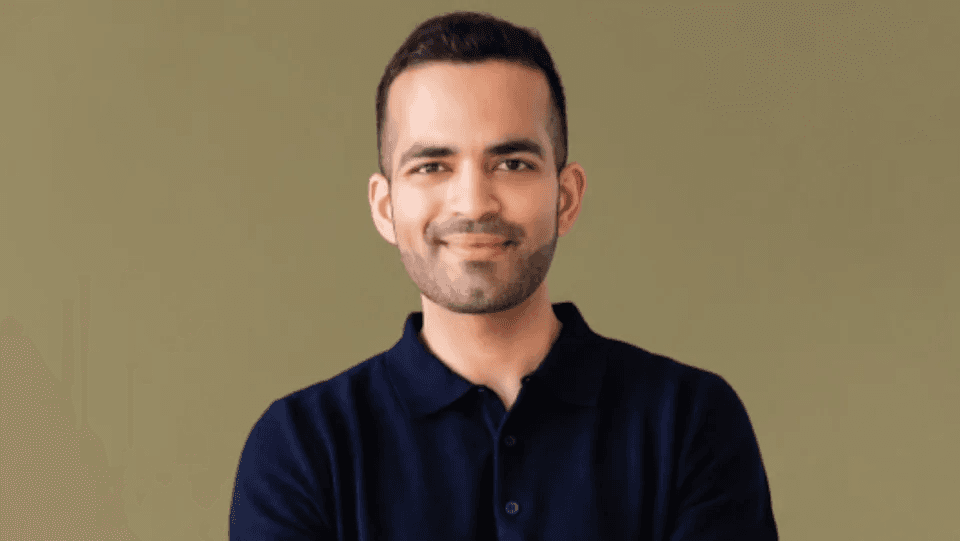
In August the firm was named the fastest-growing financial services company in America by Inc., placing 11th overall on the 2026 Inc. 5000 on three-year revenue growth of roughly 13,086%. Notably, founder and CEO Ritik Malhotra previously sold Streem to Box and Elph to Brex.
Fintechbits analysis
Why Savvy Wealth is betting against roll-ups
Malhotra has been explicit about the targets. Private-equity-backed aggregators like Wealth Enhancement Group, Mercer Advisors and Cerity Partners typically require advisors to sell their equity as the price of joining.
Those sponsors are named and real. Mercer is majority owned by Oak Hill Capital, Genstar Capital and Altas Partners. Cerity has backing from Genstar and Lightyear Capital.
The model works for private equity because advisory businesses throw off predictable fee revenue that is easy to lever and easy to bolt onto a platform. Meanwhile the tradeoff for advisors has always been control and long-term upside, exchanged for liquidity now. The company bets enough advisors would rather keep the upside and take AI infrastructure instead of a cheque.
What Savvy Wealth still has to prove
Start with scale, because the comparison is uncomfortable. Wealth Enhancement Group runs more than $66 billion. Mercer passed $63 billion. Cerity oversees over $53 billion. Meanwhile Savvy Wealth has $9 billion, roughly a seventh of the smallest firm it names as a rival.
Whether AI-native carries real product weight or works mainly as a valuation multiplier is the fair question. Here the corporate structure matters more than the software demo. Savvy Wealth Inc. is a technology parent, and advisory services run through Savvy Advisors Inc., an SEC-registered investment adviser. So the company sits inside the custody and compliance chain rather than selling software at arm’s length. That explains how a firm with $9 billion in client assets approaches $100 million of its own revenue.
Still, the ownership-retention pitch is a genuine structural difference today. However it is not obviously defensible. Nothing stops a roll-up from offering minority-equity retention once Savvy proves advisors will move for it, and partial buyouts already exist. So the real moat, if there is one, is whatever the tooling does for an advisor’s daily book rather than the ownership structure, which is copyable the moment it starts working.
What to watch next for Savvy Wealth
The valuation question is already answered, and the answer is instructive. At $600 million against roughly $100 million of ARR, investors are paying about six times revenue. That is a software-adjacent multiple for a business that is legally an investment adviser, and it is up 560% in 15 months.
So the number worth tracking is not the next valuation. It is advisor retention. After all, recruiting $4 billion in a year proves the pitch lands. Whether those advisors stay once a roll-up offers them equity retention plus a cheque is the test of whether Savvy Wealth built a platform or a waiting room.
Fintechbits covers wealth management technology, RIA consolidation, and venture funding. Nothing here constitutes financial or investment advice. All analysis represents the editorial views of Fintechbits.