7 mins read
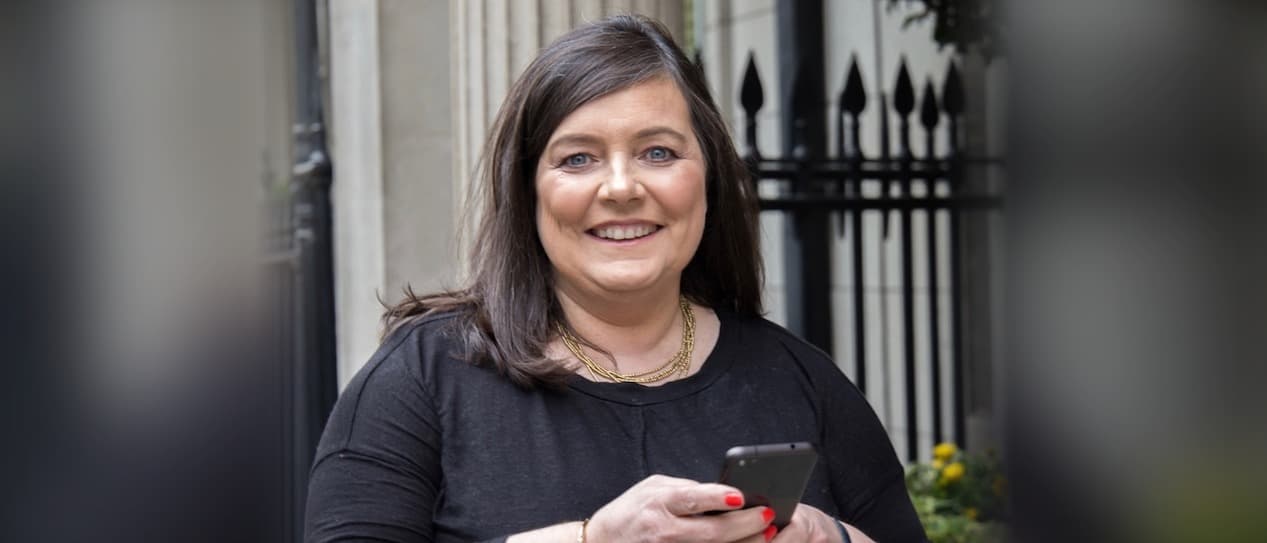
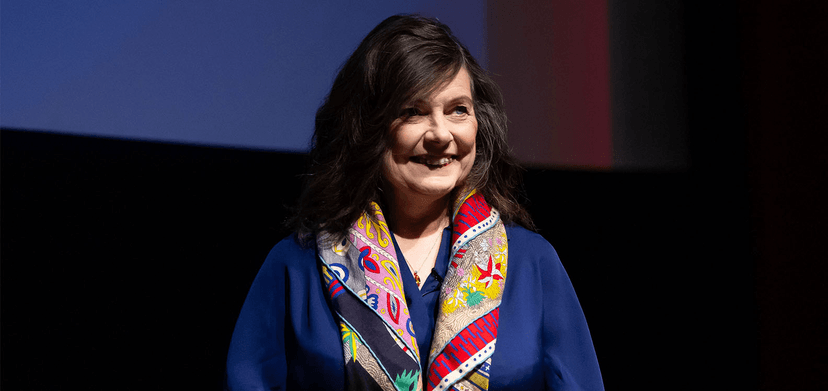
In 2015, a year after she walked away from a senior banking job to build a bank of her own, Anne Boden watched several of her founding team leave. Her chief technology officer, Tom Blomfield, went with colleagues and later founded Monzo. By her account, Starling was left with almost no staff and owed about £1m to the consultancies that had helped with its licence application. “This was Starling’s near-death experience,” she wrote in Banking On It, her 2020 book about building the bank. Eleven years on, she has sold the last of her Starling shares and is hiring engineers again.
A Swansea childhood and a computer science degree
Anne Boden was born in 1960 and grew up in Bon-y-maen, a suburb of Swansea, the daughter of a steelworker and a department store worker. She went to Cefn Hengoed comprehensive and then to Swansea University, graduating in 1981 with a degree in chemistry and computer science.
Anne Boden had always been interested in technology. Lloyds took her on as a graduate trainee, and banking turned into the job she would do for the next three decades.
Thirty years inside the big banks
The climb ran through Standard Chartered, where she completed an MBA at Middlesex University in 1990, then UBS and Aon, where she was chief information officer. At ABN AMRO and then the Royal Bank of Scotland she ran global transaction banking for Europe, the Middle East and Africa, which at RBS meant a payments business across 34 countries. In 2012 she moved to Dublin as chief operating officer of Allied Irish Banks, hired to help it recover from the financial crisis.
The crisis changed how Anne Boden saw her own trade. “I was ashamed of being a banker,” she told The Times in 2019. She had also noticed that while she was busy with her career and with the clean-up, technology had moved on, and she concluded that big banks were very hard to transform from the inside. In 2014 she left AIB to start a new bank, putting in £250,000 of her own money, which she raised by selling a holiday home.
Anne Boden and the rescue of Starling
Anne Boden was 54 when she founded the company in 2014. “I was 54 and confident enough not to care if somebody said I was stupid,” she told Fortune in 2020. The company began life as Possible Financial Services, trading as Bank Possible, and was renamed Starling Bank in January 2016. Raising money was hard. She told City AM in 2024 that many investors turned her down because they felt she had too much experience.
After the 2015 departures she described herself as effectively back at square one. The rescue came in late 2015, when the investor Harald McPike agreed to put in £48m. Over time it cost Anne Boden majority control of the company. She told TechCrunch in 2020 that her advice to founders was to raise money early and try something.
Starling received its banking licence in July 2016. On 9 May 2017 its app went live in the App Store and the bank opened to the public, according to its first annual report.
From a licence to a profitable bank
The pitch was the one she had carried out of the crisis: an account opened on a phone, instant notifications and customer service that never closed. By March 2021 Starling had more than two million accounts, over 300,000 of them for small businesses, and raised £272m in a round led by Fidelity at a £1.1bn pre-money valuation. It made its first full-year profit in the year to March 2022, and in the year to March 2023 it reported pre-tax profit of £195m, up from £32m, with more than 3.6 million customers and £10.6bn of deposits. That is a rarer result than it sounds, as Fintechbits found when it looked at what separates profitable neobanks from the cash burners.
The same results announcement in May 2023 carried Anne Boden’s decision to step down as chief executive at the end of June. She said the roles of a CEO and a large shareholder ultimately differ, and that separating hers was in the bank’s best interests. She called the dual job all-consuming, and said she had loved it. She stayed on the board for another year. The bank has kept building, growing its Engine software business and adding products such as its AI scam detector.
How Anne Boden thinks about founders
On the UKTN podcast in 2023 she said she had always felt technology should lead organisations. She talks more often, though, about who gets to found companies at all. In 2019 she told The Times that she had only started talking about it being harder as a woman about five years earlier.
From 2022 Anne Boden chaired the government’s Women-led High-growth Enterprise Taskforce. Its report, published in February 2024, found that fully female-founded businesses get 2p of every £1 of UK equity investment. In her foreword she wrote that women were starting the race with one hand tied behind their backs. A few days later Kogan Page published her Female Founders’ Playbook, which collects the experiences of women founders and investors and follows Banking On It and The Money Revolution. She was appointed MBE in 2018 for services to financial technology.
What to Watch Next for Anne Boden
The next venture has been forming for a while. In May 2023 her private company was renamed AI By Boden, according to Companies House. In March 2024 she advertised on LinkedIn for a chief technology officer and co-founder, and by mid-2024 she had left Starling’s board to concentrate on it. In September 2026, City AM reports, she began recruiting software engineers with banking technology backgrounds for an AI project called Moonshot.
On 20 October City AM reported that she had sold her remaining 2.7 per cent stake privately to several existing shareholders, in a deal Sky News said valued Starling at about £1.7bn. A Starling spokesperson said the bank wished her every success with her new venture.
She has not yet said publicly what Moonshot will build. The thing to watch is its first public launch: what the product is, and whether Anne Boden, who started a bank at 54, is taking banking engineers back into financial services or somewhere new.
Questions about Anne Boden
Who is Anne Boden?
Anne Boden is the founder and former chief executive of Starling Bank, which she started in 2014 and led until June 2023. She grew up in Swansea and spent about 30 years in banking before that, at Lloyds, Standard Chartered, UBS, ABN AMRO, RBS and Allied Irish Banks.
Why did Anne Boden step down from Starling?
She stepped down as chief executive at the end of June 2023, saying the roles of a CEO and a large shareholder ultimately differ and that separating hers was in the bank’s best interests. She stayed on Starling’s board for another year before leaving to focus on AI.
Does Anne Boden still own Starling shares?
No. City AM reported on 20 October 2026 that she had sold her remaining 2.7 per cent stake privately to existing shareholders, in a deal Sky News said valued Starling at about £1.7bn.
What is Moonshot?
Moonshot is the name City AM reported for an AI project that Anne Boden began recruiting software engineers for in September 2026, alongside her company AI By Boden. She has not said publicly what it will build.