6 mins read
Navra, the Las Vegas fintech led by SoFi and Figure co-founder Mike Cagney, closed a $19 million Series A on 6 October 2026, according to the company’s release. Ribbit led the Navra Series A, which the company describes as oversubscribed. Baseline and DCM, both early Figure investors, joined, along with strategic investors Jump Crypto and Figure Technology Solutions. Navra is building a single app that gives retail investors and institutions access to several blockchain venues.
What Navra says it is building
Navra’s product is a desktop and mobile application that offers on-chain access to yield protocols and cash rails through one interface. It includes an embedded AI agent to help users. Custody is described as keyless self-custody “that satisfies qualified custody requirements.” Institutions get team management with role-based controls, a full audit trail and integration with fund accounting and administrators. Partners can white-label the whole app or embed individual modules.
The product the Navra Series A is funding is not live yet. Navra says it is working with a group of design partners and will start a limited rollout to retail and institutional users in late October 2026, with white-label availability “shortly thereafter.” Proceeds from the Navra Series A will go to building AI infrastructure, expanding the platform and acquiring customers and partners. There is a waiting list at navra.com.
Figure is Navra’s first and only partner so far
Alongside the Navra Series A, the company named Figure as its first blockchain partner. Navra has integrated Figure’s Democratized Prime yield protocol and YLDS, which the release calls the first SEC-registered yielding stablecoin, and the two firms are working on integrating Figure’s trading markets. Figure CEO Michael Tannenbaum said Figure’s ecosystem is “putting more than $2B a month of real world assets on blockchain” and that he wants DeFi to finance those assets.
Cagney’s argument is that the money has not followed the technology. “Blockchain DeFi protocols are the best foundation for the $6 trillion asset based finance market, but the real dollars haven’t moved over yet,” he said in the release. He names three obstacles: user experience, keyless qualified custody and enterprise control. Navra says it solves all three.
Fintechbits analysis
Why the Navra Series A looks like Figure’s distribution arm
Cagney co-founded Figure and, according to Tannenbaum’s quote in the release, chairs Figure’s board. Figure Technology Solutions invested in the Navra Series A alongside two early Figure backers, and the only protocols Navra has integrated so far are Figure’s. Navra describes itself as a gateway to “multiple blockchain venues,” but on day one it is a front end for Figure’s products.
A Figure-centric start can still be a sensible business. Figure has a supply problem it would like solved: it says it puts more than $2 billion a month of real-world assets onchain, and those assets need buyers and lenders. A friendly distribution app that brings retail and institutional money to Democratized Prime and YLDS helps with that. Users and white-label partners should still understand that Navra’s early product is closely tied to Figure, and judge the yields and risks on that basis. The test of the “multiple venues” claim is whether the next integrations are protocols Cagney has no stake in.
The custody claim needs explaining
The most ambitious line in the release is the promise of keyless self-custody that satisfies qualified custody requirements. Under US rules, registered investment advisers generally have to hold client assets with a qualified custodian, typically a bank, broker-dealer or trust company. Self-custody, where the user controls the asset, is usually the opposite of that arrangement. Navra may be using a technical design, such as multi-party computation run by a regulated partner, that lets both descriptions hold at once. The release does not explain how, and institutional buyers will ask before they move any client money.
That matters for the institutional pitch behind the Navra Series A. Funds and advisers need audit trails and accounting integrations, which Navra promises, but they need custody that their compliance teams and auditors will sign off on first. Fintechbits has covered other attempts to bring credit and yield onchain, including Visa’s plan to turn settlement data into onchain credit. For background on the dollar tokens these apps run on, see the stablecoin explainer.
What to Watch Next After the Navra Series A
The first milestone is the limited rollout in late October 2026, and whether design partners are named. The second is the first integration with a venue outside the Figure ecosystem, which would show Navra is more than a Figure front end. The third is a clear legal explanation, ideally with a named custodian, of how keyless self-custody meets qualified custody requirements. If that explanation never comes, the Navra Series A will mostly have paid for a retail app, and the institutional side of the pitch will stay theoretical.
Questions and answers
How much did Navra raise?
The Navra Series A raised $19 million, led by Ribbit and announced on 6 October 2026, with Baseline, DCM, Jump Crypto and Figure Technology Solutions also investing.
What does Navra do?
Navra is spending its Series A money on a desktop and mobile app that gives retail investors and institutions one interface to onchain yield protocols and cash rails, starting with Figure’s Democratized Prime and YLDS.
When does Navra launch?
Navra says it will start a limited rollout to retail and institutional users in late October 2026, with white-label versions to follow.
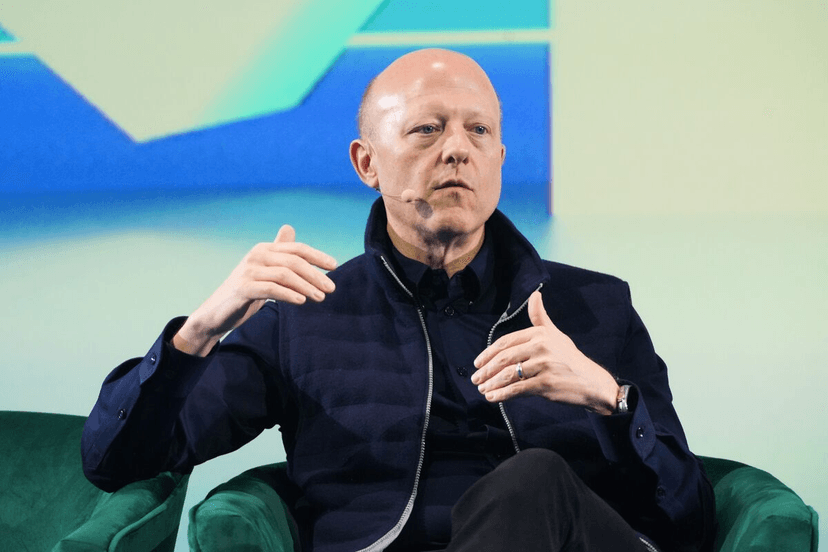
Cover photo: Mike Cagney at TechCrunch Disrupt NY 2017 by TechCrunch, via Wikimedia Commons, licensed CC BY 2.0.