6 mins read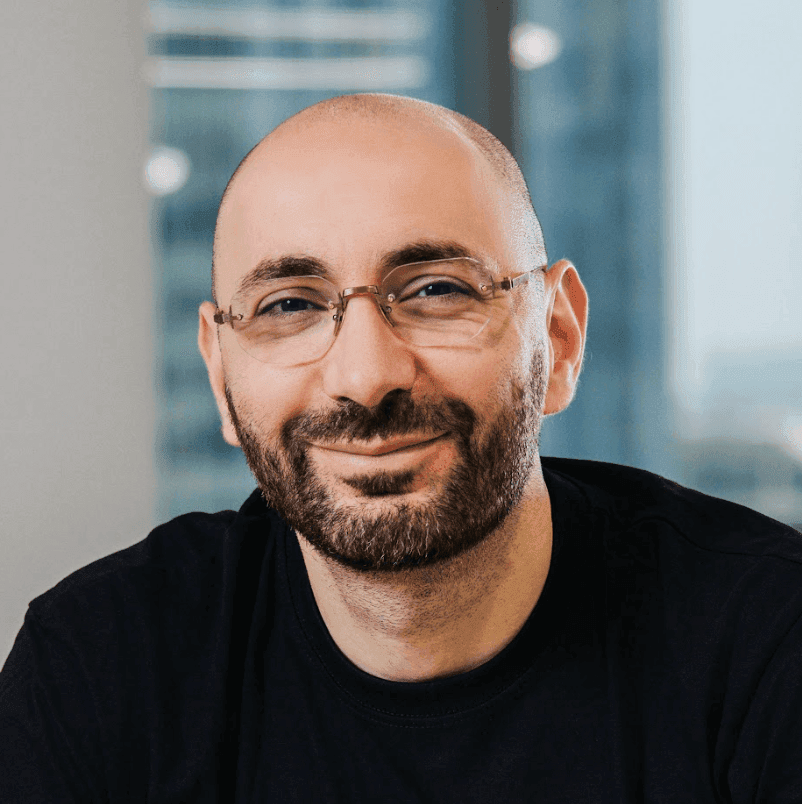
Hosam Arab has a habit of starting his story with the unflattering part. Before Tabby, and before Namshi, he was an engineer with a Harvard MBA who kept leaving jobs, and at some point he stopped blaming the jobs. “Eventually I concluded that maybe the issue wasn’t the industries I was trying. Maybe it was me,” he told the investor HSG in a founder profile published in June 2026.
It is an unusual admission from the chief executive of a company now valued at $6.5 billion. It also goes some way to explaining how he built it.
An engineer with no startup script
Hosam Arab took a conventional route. He earned a bachelor’s degree in electrical engineering at Queen’s University in Canada, worked as an engineer at Schlumberger and GE, then went to Harvard Business School. He has said he thought HBS would give him the answers. It didn’t. Advisory work followed, then private equity at Waha Capital in Abu Dhabi, where he helped manage the firm’s portfolio of assets. He left each time because he wasn’t enjoying the work.
He is also the first entrepreneur in his family, so nobody at home had a template to hand him. What tipped him over were two things. Around 2007 and 2008 he came across Zappos in the United States, just as it was starting to scale, and saw what online retail could do. Then he met Rocket Internet at the moment he had already decided to quit the corporate track. He has put it down to a lot of coincidences lining up at once.
Namshi and the problem that would not go away
The result was Namshi, the online fashion retailer Hosam Arab co-founded in 2011. There was no regional playbook, so the team tested fast, let customers and data decide, and killed what didn’t work. There was a real internal debate about whether anyone would buy a dress on a small screen; apps went on to carry 85 to 90 per cent of transactions. The company was working with influencers in 2014 and 2015, early for the region. Saudi Arabia, launched in 2012 as a test, grew to roughly 80 per cent of volume.
Emaar Malls bought 51 per cent of Namshi in 2017 and, in February 2019, the remaining 49 per cent for about $129.5 million. Shortly afterwards Hosam Arab said he was stepping down, telling staff there was never going to be a good time to leave.
He took one stubborn problem with him. Over eight years at Namshi, cash on delivery fell only from about 85 per cent of transactions to about 75 per cent, far slower than he expected. His conclusion, as Hosam Arab put it to HSG: “Cash was a trust mechanism, not a financing preference.” Paying at the door was how shoppers pushed the risk back onto the retailer.
Hosam Arab builds Tabby at speed
Buy now, pay later answered that directly, because the customer pays after the goods arrive. Hosam Arab co-founded Tabby in Dubai in 2019 with Daniil Barkalov. Namshi had enjoyed years of slow experiments. Tabby got none of that: the founders launched, raised their first funding and were live in two markets within six or seven months. Customers came through merchant partners, which he says keeps Tabby’s acquisition cost essentially at zero.
After graduating from the Saudi Central Bank’s regulatory sandbox and securing a buy now, pay later permit, Tabby moved its headquarters from the UAE to Riyadh in late 2023, the same year it raised a $200 million Series D at a $1.5 billion valuation. His explanation for the move was plain: Saudi Arabia had become the largest market, and he wanted the company closer to customers and regulators. Tabby has been profitable since that year. It agreed to buy the Saudi digital wallet Tweeq in September 2024, then raised $160 million at a $3.3 billion valuation in February 2025, and a secondary share sale in October 2025 implied $4.5 billion.
The licences kept coming. A UAE wallet licence in April 2026 underpins Tabby Cash, a spending account launched in July. In June the Saudi Central Bank granted consumer and SME finance licences, allowing financing of up to SAR 50,000, repaid in up to 12 monthly instalments, and working capital for merchants. Lean Technologies took a similar sandbox route to its own SAMA licence for open banking in March 2026. For Tabby, the result is that a checkout button now sits inside something much closer to a full financial services company.
How Hosam Arab thinks about the job
Talking to HSG, Hosam Arab kept coming back to the unglamorous parts of the job. Underwriting, collections, customer support and regulatory engagement, he said, decide whether a fintech compounds or stalls. He is blunt about commitment too, arguing that nobody can go into entrepreneurship half committed, and about competition: the white spaces in the region are narrower than they used to be, and what still works is a product shaped for this region, one that treats local payment habits, regulation and attitudes to credit as design constraints.
On money, his advice is to choose investors with the same care as operating partners. In an interview with MAGNiTT he said he wanted backers with knowledge and contacts across the region’s retail, financial and regulatory worlds. He has also made sure the people who built Tabby share in it. The company has run share tenders since 2023, and those tenders have facilitated more than $100 million in share sales for current and former employees.
What to Watch Next for Hosam Arab and Tabby
On 14 September 2026 Tabby announced a $233 million Series F at a $6.5 billion valuation, led by Blue Pool Capital with HSG, Wellington Management and Arbor Ventures. It reports 25 million registered users, 70,000 business partners and more than $18 billion in annualised transaction volume. Hosam Arab framed the round by going back to Tabby’s first product, a button at an online checkout: “Everything since, every product and every licence, has come back to the same idea: people deserve more from their money.”
Two things are worth watching. The first is whether Tabby Cash and the new Saudi financing licences turn a checkout habit into someone’s main financial relationship, in a buy now, pay later market that is changing fast elsewhere too, as Affirm’s return to Australia shows. The second is a listing. Bloomberg reported in February 2025 that Tabby had hired HSBC, JPMorgan and Morgan Stanley for a Saudi IPO, with no final decision on size or timing. When a date is set, it will be the clearest test yet of the bet Hosam Arab made on Riyadh in 2023.