5 mins read
Mastercard and BVNK launched the Mastercard Global Money Platform on 15 October 2026, a single API that lets banks, fintechs and enterprises embed multi-currency accounts holding both fiat and stablecoins, convert between them, issue stablecoin-linked cards and pay out to local bank accounts through Mastercard Move. Fintechbits notes that the Global Money Platform is the first product from a stablecoin business Mastercard agreed to buy for up to $1.8 billion, including $300 million in contingent payments, and that it arrives about two months after the deal closed in August without naming a single supported stablecoin, a transaction volume or a price. Nuvei and Marqeta are among the first companies due to integrate, according to the joint release on BusinessWire.
What the Global Money Platform puts behind one API
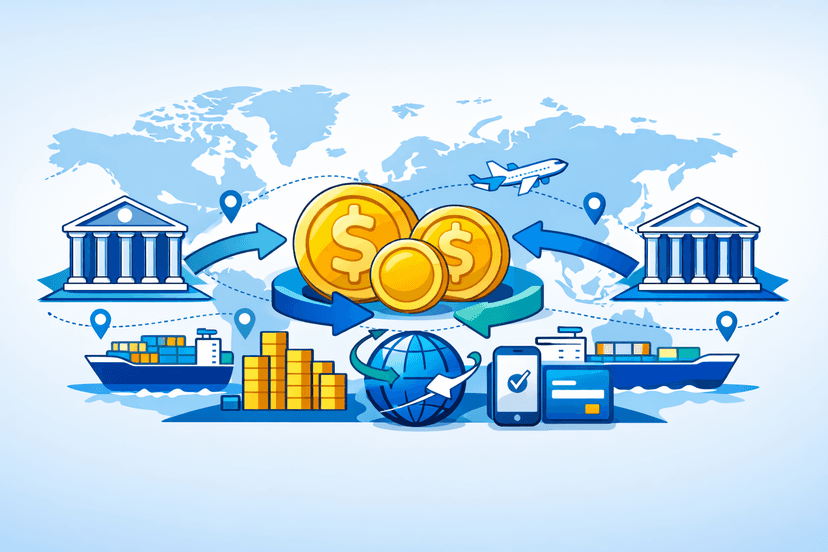
The core of the Global Money Platform is what Mastercard calls a global money account, a multi-currency account where fiat balances and stablecoins sit side by side and convert through one API. Around it Mastercard lists six functions: send, receive, convert, store, spend and earn. Customers can start with the parts they need and add more later.
Payouts run over Mastercard Move, the company’s money movement portfolio, which Mastercard says reaches more than 17 billion endpoints. A business holding stablecoins can use that balance to pay a supplier’s local bank account in local currency. Mastercard expects payout coverage to reach more than 40 currencies across more than 200 countries and territories in 2027.
The same balances can be spent through stablecoin-linked cards, with issuing available in more than 130 countries and acceptance across Mastercard’s merchant network. Mastercard also flags future support for agentic commerce and for other regulated forms of money, including tokenized deposits. The Global Money Platform is sold through BVNK.
Who is plugging into the Global Money Platform first
Nuvei, the payments processor, and Marqeta, the card issuing platform, lead the list of early integrators, alongside Ontop, Beem and Almond FinTech. The release says these companies “will be among the first to integrate,” which describes a pipeline, not live traffic.
Marqeta is the least surprising name. Fintechbits covered Marqeta’s partnership with BVNK on stablecoin-backed cards in September, when BVNK was running more than $39 billion in annualised stablecoin volume. Nuvei matters more. Phil Fayer, Nuvei’s chair and chief executive, said stablecoins are “becoming an increasingly important part” of global commerce, and a processor of Nuvei’s size routing merchant payouts through the Global Money Platform would be a real volume signal.
Chris Harmse, BVNK’s co-founder and chief business officer, went further, saying the Global Money Platform “will become the single infrastructure layer not just for stablecoins, but for every form of money.”
Fintechbits analysis
Why the Global Money Platform is a distribution play first
The Global Money Platform is mostly a packaging exercise, and that is not an insult. BVNK already sold stablecoin accounts, conversion and payouts before Mastercard bought it. What changes is that a bank or fintech can buy those services with a Mastercard contract, Mastercard’s compliance reputation and Mastercard Move’s payout reach attached. A risk committee at a mid-sized bank will treat that very differently from a contract with a crypto start-up.
Visa offers a contrast. It reported on 1 October that about 17% of its stablecoin-linked card volume ran through business and commercial programs, across more than 160 stablecoin-linked card programs. Visa has been building stablecoin features into existing products one at a time. Mastercard bought a full stack and wrapped it in a single product name. Both approaches can work, but Mastercard’s carries more integration risk, because one platform now has to satisfy card issuers, payout firms and corporate treasurers at once.
The release does not name which stablecoins the Global Money Platform supports, which matters because issuer choice decides reserve quality and redemption terms. It gives no pricing for conversion or payouts. And it lists “earn” and “configurable rewards” as account features without saying who pays that yield or under which licence, a sensitive point for any product that holds stablecoin balances for US customers. Our view is that the product shape is right and the disclosure is thin.
Frequently asked questions
What is the Mastercard Global Money Platform?
It is a modular product, launched by Mastercard and BVNK on 15 October 2026, that gives banks, fintechs and enterprises one API for multi-currency accounts holding fiat and stablecoins, conversion, stablecoin-linked cards and local payouts through Mastercard Move.
Which companies are integrating first?
The release names Nuvei and Marqeta as among the first integrators, alongside Ontop, Beem and Almond FinTech. It does not say any of them has gone live.
What does the release leave out?
Fintechbits notes that the release names no supported stablecoin, no transaction volume and no pricing, even though the product comes from a business Mastercard agreed to buy for up to $1.8 billion. It also does not explain who funds the “earn” and rewards features.
What to Watch Next
The test is whether Nuvei or Marqeta reports live merchant payouts or card spend on the Global Money Platform, with a volume figure attached. A second marker is Mastercard’s next quarterly results on its investor relations site, where any disclosed stablecoin volume would show whether the BVNK purchase is producing revenue or still building pipeline.