8 mins read
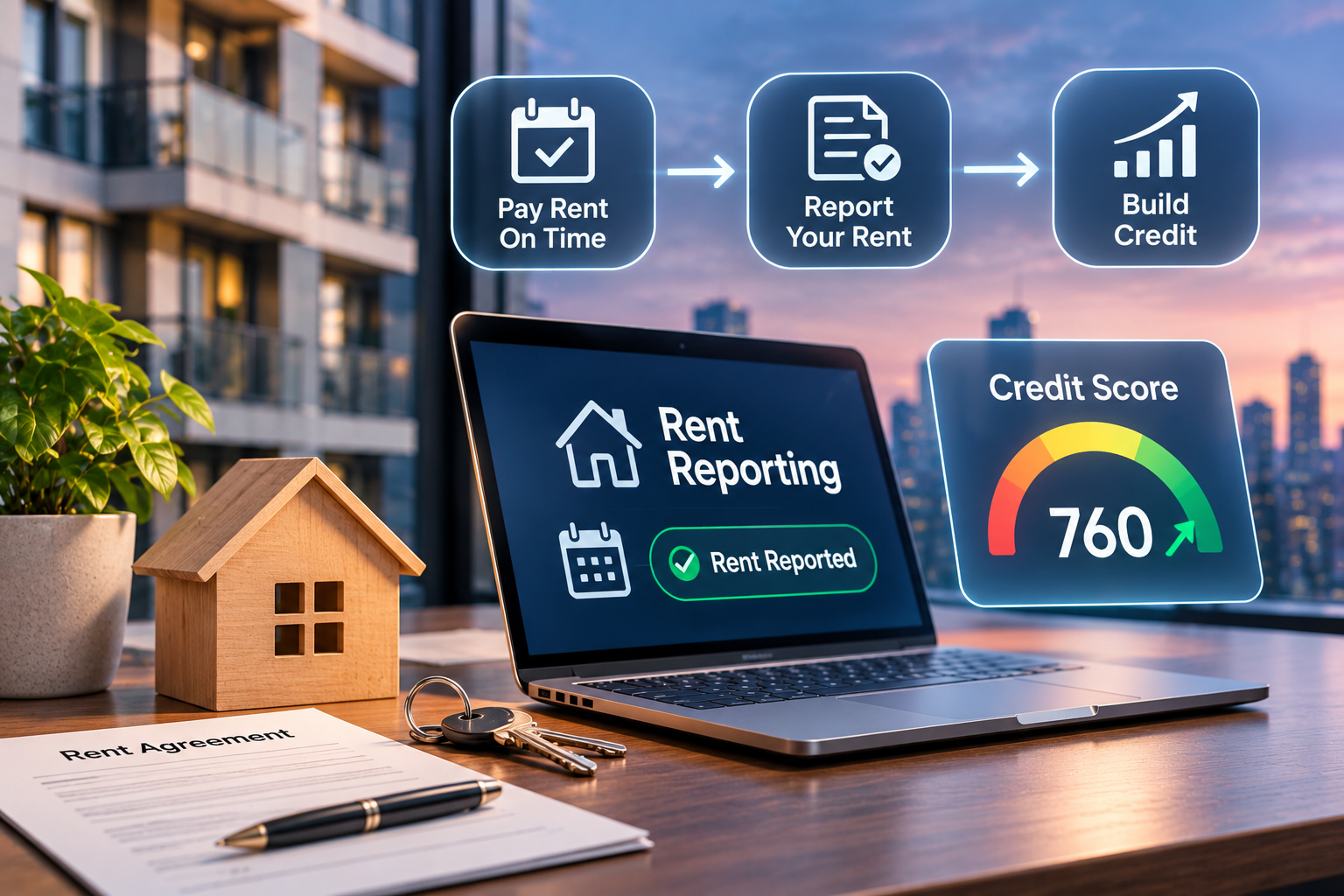
Rent reporting can turn on-time rent into a credit score, but only when the lender’s model reads the data. We asked industry leaders whether it improves access to credit and what results they have seen.
Rent reporting has moved from a niche add-on to a mainstream feature in 2026. US mortgage regulators have opened the door to newer credit scores that can read rent data. Meanwhile, Experian and ClearScore both launched tools this month that put UK rent on credit files. Still, a reported payment only helps if the lender’s score counts it. That gap shapes most of the debate.
Through HARO, we asked whether reporting rent or utility bills to credit bureaus improves access to credit. We also asked what results respondents had seen. We wanted founders and product leads at credit-building platforms, lenders and credit bureaus, ideally with score or approval data. Two people answered, and we used both. Where a claim did not hold up against current scoring rules, we corrected it and explain why below.
What rent reporting adds to a credit file
Rent reporting sends a tenant’s monthly payments to one or more credit bureaus, through a landlord or a third-party service. For people with no loans or cards, that record can be the first thing a bureau can score. The strongest evidence comes from the Urban Institute. It ran the first randomised controlled trial of opt-in, positive-only rent reporting. Its researchers found significant gains in the chance that tenants had a score at all. The trial also found more tenants reaching a near-prime VantageScore of 601 or above.
Uptake of rent reporting is growing fast. A later Urban Institute analysis puts the share of US renter households with rent ever reported at 13% in 2024. That is up from about 3% in 2020. In addition, Fannie Mae says more than 43,000 renters in its Positive Rent Payment pilot established a credit score. It adds that 56% saw their score rise. However, those figures come from the vendors that took part, so they are not independent.
Fintechbits analysis
Why the scoring model matters as much as the data
Ankit Sarawagi curates CFO Matrix, a knowledge platform on finance in growing companies.
“You can get some benefit from rent reporting, and the people who gain most are those with little or no credit history, because it gives the bureaus something to score. If you’ve already got a few accounts, it won’t help as much. There are two things to weigh. First, check whether the lender’s scoring model counts rent. Many lenders still use older models that don’t, so your score might change but your chances of approval won’t. Second, the benefit only comes from on-time payments, and if you pay late, some services will report that too. From a financial point of view, find out which bureaus they report to, whether they report past payments and what it’ll cost. In short, it’s only worth it if the lender uses a model that takes rent into account.”
Ankit Sarawagi, Curator, CFO Matrix
His central point checks out. FICO Score 8, the version lenders use most, ignores rent. However, FICO Score 9 and 10 count it when it appears on a report. In mortgages, the gap is narrowing. On 22 April 2026, the FHFA and HUD announced a shift for Fannie Mae and Freddie Mac. Both now accept loans scored with VantageScore 4.0, a newer model that can count reported rent. FICO Score 10T is due to follow. Still, classic FICO remains the default for many lenders. So reported rent will not change every decision yet.
His warning about late payments holds for some services but not all, a point our next contributor pushes much further. Also, Sarawagi did not share outcome data from users, and CFO Matrix does not run a reporting product. His answer is informed commentary rather than first-hand results.
The sceptic’s case on privacy and late payments
Loretta Kilday, a Chicago debt attorney, speaks for Debt Consolidation Care, an online debt relief forum.
“I’ve spent three decades picking apart ruined consumer balance sheets in Chicago, and I’ve watched the credit industry keep finding new ways to profit from working people. Rent reporting is sold as a lifeline for thin-file consumers, but I see it mostly as a data grab. To use many of these services, you hand over access to your bank account and your transaction history in exchange for a score bump. You might log into a free app and see your VantageScore jump, and it feels like a win. But when you apply for a thirty-year mortgage, many lenders still pull classic FICO scores, such as FICO 2, 4 or 5, which don’t count rent or utility data. So you may trade a lot of privacy for a number that carries little weight when it matters most. There’s a downside risk too. Rent and utilities usually stay off your credit file unless they go to collections. Sign up for a service that reports late payments, and a billing error by your landlord or a late gas bill can land on your file and hurt your score. If you’re locked out of the credit system, I’d build a clean history instead. Put five hundred dollars into a secured credit card, attach one ten-dollar monthly subscription to it and set up an automatic payment that clears the balance three days before the statement date. Then lock the card away. You’ll build a revolving credit record without handing your transaction data to a third party.”
Loretta Kilday, DebtCC Spokesperson, Debt Consolidation Care
Part of her case holds. Classic mortgage scores such as FICO 2, 4 and 5 predate FICO Score 9, which counts reported rent. However, the picture is shifting, since Fannie Mae and Freddie Mac now accept VantageScore 4.0. So her claim that rent reporting carries no weight in a mortgage is already out of date for some lenders.
Her warning on late payments needs context. It applies to full-file reporting, which sends both on-time and late payments. Positive-only programmes, like the one in the Urban trial, drop missed payments. Experian uses a similar rule for Experian Boost in the US, so a late bill cannot lower the score. Therefore, the type of rent reporting matters as much as the decision to sign up.
Her privacy point is fair but overstated, since most rent reporting services ask for read-only access to spot rent payments. Her secured card route is a standard credit-building tactic, though it ties up a deposit. Also, she shared no outcome data, so this is informed opinion rather than first-hand results. We cut an unsourced claim about the size of typical score gains from her answer.
The UK moves on rent data
On 9 November, Experian extended Boost to rent and buy now, pay later commitments. Boost reads payments from a linked bank account through open banking. Experian says seven in ten users see an immediate score improvement. However, it sells the product and did not say how it measured that figure.
Two days later, ClearScore launched free rent reporting to Experian, Equifax and TransUnion. It runs the service in partnership with Equifax. Equifax UK estimates that up to a quarter of UK adults have a limited credit file or none. Meanwhile, CreditLadder already offers rent reporting through read-only open banking access. For background, see our guide to what open banking is. A thicker file also matters for price. Our report on Revolut UK personal loans found rates of up to 29.3% APR.
What works for renters using rent reporting
First, check which credit scores your likely lender uses, since older models ignore rent entirely. Next, pick a positive-only service if your income is irregular, so one late payment cannot drag your file down. Then confirm which bureaus the provider reports to and whether it adds past months. Finally, weigh the fee against the likely gain. Rent reporting helps most when you have little or no credit history. The benefit shrinks once you already hold several accounts.
What to watch next
The next big test for rent reporting is the mortgage market. FHA plans to start accepting VantageScore 4.0 on 1 January 2027. Lenders also need time to update pricing and systems, so adoption will stay uneven through 2027. In the UK, watch whether lenders treat rent data in Experian and Equifax files as a real underwriting signal.
Above all, rent reporting only improves access to credit when the lender’s score counts it. Renters should check that before they pay for any service.
FintechBits covers payments, banking and fintech developments for readers in the US and UK. This article is for information only and is not financial advice. Views expressed are those of the FintechBits editorial team.