6 mins read
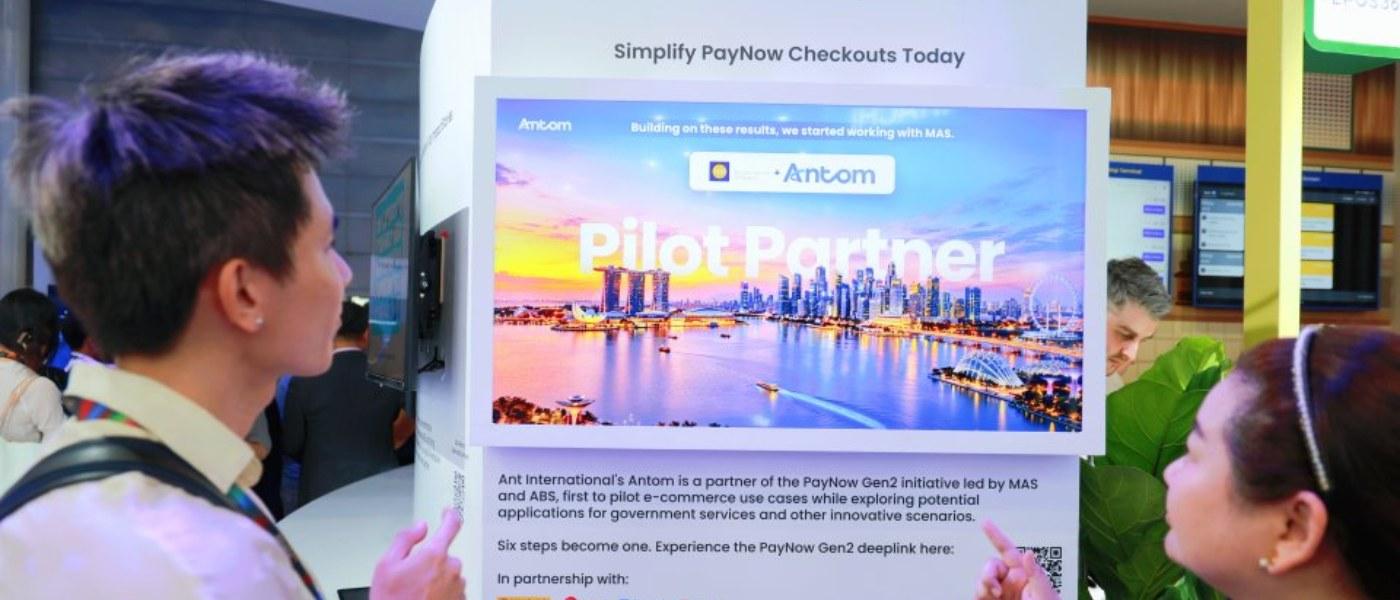
Ant International says PayNow deep-linking is live for e-commerce through Antom and 2C2P by Antom, with Lazada reporting about 9% more successful transactions in early results. Fintechbits checked the MAS and ABS release on the PayNow Generation 2 study of 25 June 2026 and found that the regulators named deep-linking in PayNow QR codes as one of four priority enhancements and said they would look to have it ready within a year. That makes the Lazada checkout an early private-sector test of a feature the national scheme has not finished specifying. Ant International also says GovTech Singapore is exploring the same flow for government payments through GovWallet.
What Ant International put live
According to Antom’s own release, the old route meant taking a screenshot of the QR code, opening a banking app, uploading the image and then returning to the merchant. Deep-linking sends the shopper straight into the bank app with the payment details filled in, and back to a confirmation page afterwards. Ant International says the flow shrinks from six or more manual steps to a single one.
Lazada supplied the proof point. Early results showed about 9% more successful transactions after the marketplace added the feature. The release gives no baseline success rate, no sample size and no measurement period, so the 9% is a company-reported direction of travel and not an audited conversion figure. Gary Liu, chief executive of Antom and senior vice president of Ant International, said the next generation of digital payments “will be shaped by open collaboration”.
Ant International also plans to onboard to the SGQR+ switch in one of its first two participant waves, a scheme it says targets QR interoperability at home and abroad, and it will explore PayNow Gen2 support through Alipay+. The MAS release does not mention SGQR+, so that timetable rests on Ant International’s word alone.
What MAS and ABS said about PayNow deep-linking
The regulator’s own description of the problem matches Ant’s. MAS says consumers save the QR code, switch to a banking app to upload it and finish the payment, then return to the merchant site. Of the four enhancements picked from a study that consulted 37 organisations and benchmarked 11 jurisdictions, deep-linking is the checkout one. The other three are QR interoperability between PayNow and NETS QR, larger-value public-sector payments, and a longer list of payment capabilities that includes request-to-pay and agentic commerce features.
Timing is where the two sources sit together awkwardly. MAS and ABS aim to pilot PayNow and NETS QR interoperability by the end of 2026 and to publish an implementation roadmap by the same date. Deep-linking is the item they said would be ready within a year, which means a vendor shipping it in November 2026 is ahead of the schedule the authorities set for themselves. Ant International says the report is the second phase of the study and that its own paper on deep-linking was part of it.
The government payments gap behind the GovWallet trial
The public-sector use case is the more interesting one for Singapore. MAS says larger payments to government agencies go through GIRO, which needs pre-registration and can take up to three business days. It plans a sandbox with government agencies in 2027, with transaction limits and safeguards.
Ant International says its 2C2P by Antom unit and GovTech Singapore are exploring the flow inside GovWallet, with a proof of concept for Singapore FinTech Festival 2026. A proof of concept is not a service. Fintechbits found no launch date for GovWallet in the MAS release or in Antom’s own release, so readers should treat it as a demonstration of the flow only. Visitors can try the journey at the Ant International booth until 20 November 2026.
Fintechbits analysis
Why a private checkout test arrives before the national build
Fintechbits reads this as a real but narrow win. The pain point is documented by the regulator, so a vendor that removes five or more manual steps from a PayNow checkout deserves credit. The evidence, though, is one merchant, a rounded figure and no stated period.
The strategic angle matters more. Ant International is positioning Antom ahead of the standard, so that when MAS and ABS finalise deep-linking, merchants already on Antom have a working reference. Rival acquirers will face the same demand from Lazada-sized merchants without a published specification to build against. Fintechbits has followed the same Alipay+ network expanding elsewhere, including DuitNow QR reaching Alipay+ merchants in five destinations and EnsembleTX settlement tests, and in both cases Ant International worked through a local scheme or a regulator-run pilot, PayNet in Malaysia and the HKMA in Hong Kong.
Frequently asked questions
What is PayNow deep-linking?
It is a way of opening a shopper’s banking app directly from an online checkout, with the PayNow payment details already filled in. It replaces saving a QR code and uploading it by hand.
Who offers PayNow deep-linking for e-commerce in Singapore?
Ant International says it is the first partner under the MAS PayNow Gen2 initiative to offer live deep-linking for e-commerce, through Antom and 2C2P by Antom. Lazada is the named merchant. MAS and ABS themselves say national readiness is intended within a year of 25 June 2026.
How reliable is the 9% Lazada figure?
It comes from Ant International’s release and is described as early results. No baseline, sample size or period is given, so it should be read as an indicator and not a benchmark.
What to Watch Next
MAS and ABS have promised an implementation roadmap by the end of 2026, and it should show whether Ant’s flow becomes the template or one of several. The PayNow and NETS QR interoperability pilot is due by the same date. If Lazada or Ant International published a baseline and period for the 9%, an anecdote would become evidence. A GovTech statement on GovWallet would show whether the trial leaves the demonstration stage.