4 mins read
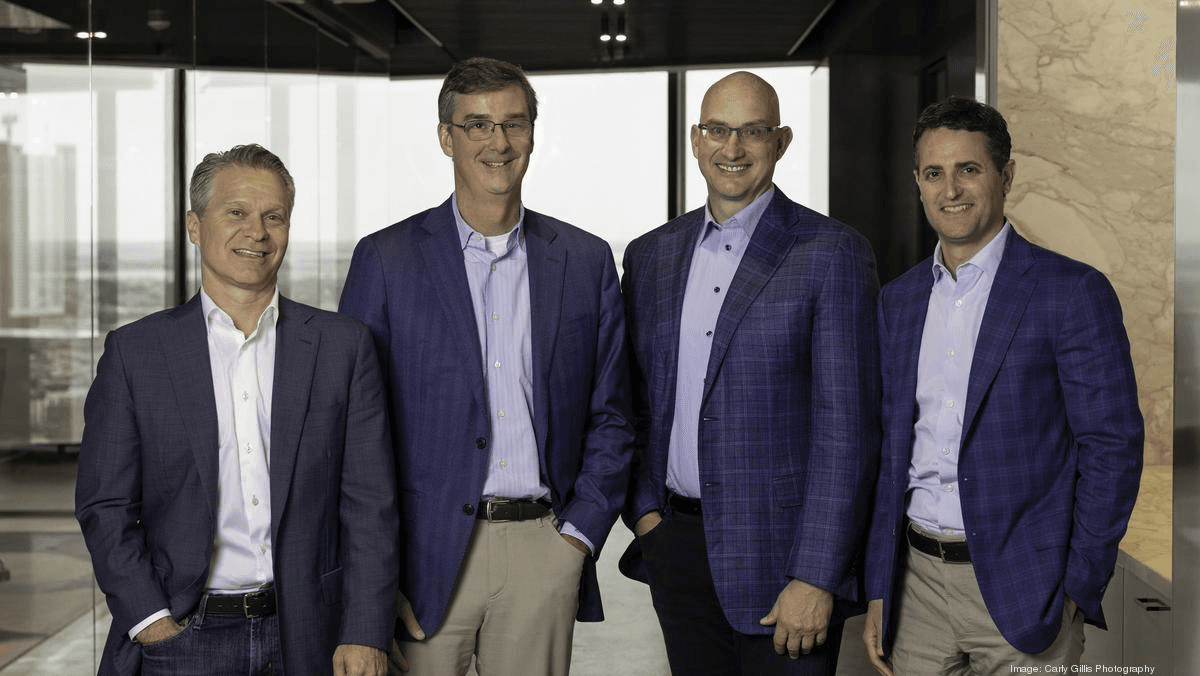
Great Hill Aurenity terms went undisclosed, which is the first thing worth noticing. Great Hill Partners made a strategic investment in Aurenity, a technology-enabled excess and surplus managing general agent, with founding investor Agman and management retaining significant portions of their equity.
What the Great Hill Aurenity Deal Covers
The Great Hill Aurenity target was founded in 2022 and based in West Hartford, Connecticut, running six core E&S programs spanning primary, lead and excess casualty, public entity and religious organisations, and property, backed by a panel of carrier partners. Its founders are named: Nick Davies as chief executive, Doug Trainor as chief underwriting officer, Pat Safino as chief operating officer, with Janet Beaver and Mark Fuderanan leading excess and primary casualty. The team claims over a century of combined carrier experience.
Excess and surplus insurance covers risks standard carriers decline: non-standard properties, unusual liability exposures, anything outside an admitted insurer’s box. It has been the fastest-growing corner of commercial insurance for several years as climate risk, litigation costs and market hardening push business into the channel.
Fintechbits analysis
Why the Great Hill Aurenity Structure Matters
Undisclosed Great Hill Aurenity terms plus a founding investor retaining a significant stake is the profile of growth capital rather than a buyout. So Great Hill is buying in alongside Agman and management, not taking control.
One qualifier belongs on that reading. Great Hill managing directors Matt Vettel and Nick Cayer, plus principal Bob Anderson, all join Aurenity’s board. Three seats for a minority investor is meaningful governance, and it sits oddly with a purely passive framing.
Scale context helps too. Aurenity had raised roughly $11 million in prior seed funding, starting with $10 million from Agman at launch in January 2022, and employs around 26 people. The Great Hill Aurenity investment is therefore a step change in capitalisation for a small, fast-moving underwriter rather than a late-stage top-up.
The Great Hill Aurenity AI Claim, Tested
The Great Hill Aurenity release leans on AI enablement language that is standard positioning at this point in the insurtech cycle. Every MGA raising money describes its risk models as AI-powered, and Aurenity points to its Augment models supporting underwriting decisions. No loss ratio, combined ratio or underwriting turnaround figure accompanies it.
But evidence does exist, and it is worth being precise about what it shows. Aurenity has published that it doubled submission capacity and reclaimed more than 1,000 team hours without adding headcount, by automating broker submission intake using Heron Data. It also works with Verisk on data.
Read that carefully. Those are throughput gains, not risk-selection gains. Automating the ingestion of ACORD forms and loss runs demonstrably saves hours. It says nothing about whether the underwriting models price risk better than a traditional MGA. The operational half of the technology story is documented; the underwriting half is not.
Worth noting too that the intake automation is a bought capability rather than a built one, which complicates any framing of proprietary technology infrastructure as the moat.
What the Great Hill Aurenity Deal Has to Prove
Private equity chasing tech-enabled MGAs in E&S is a well-worn thesis rather than a novel bet. Great Hill’s portfolio already includes One Inc, an insurance payments network, and Pareto in employee benefit captives, and the embedded distribution template is familiar: back a founding team with carrier relationships, layer on data and automation, fund faster growth.
What would make this judgeable is premium volume, loss ratios or program-level performance in future updates. None appear here, and for an MGA the loss ratio is the only number that settles whether the technology is doing underwriting work or administrative work. Carrier partners see those figures. Everyone else waits for a cycle to turn.
Fintechbits covers insurance technology, private capital and specialty underwriting. Nothing here constitutes financial or investment advice. All analysis represents the editorial views of Fintechbits.