8 mins read

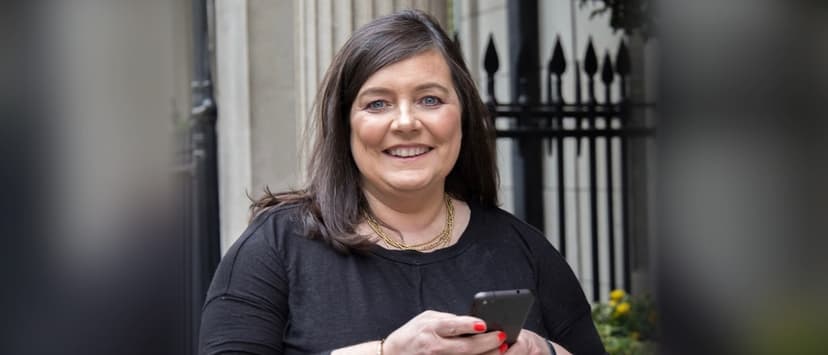
Anne Boden Lockwood is the Starling founder’s second bank: a planned UK current account that lets customers’ AI agents pay bills, switch suppliers and cancel subscriptions within limits the customer sets. She unveiled it in The Sunday Times on 15 November 2026, describing a bank “built by agents, to serve customers that want to use agents”, according to FinTech Futures. Fintechbits checked Companies House and found that Lockwood AI Limited, company number 16500948, was incorporated on 6 June 2025 as AI for H Ltd with Boden as its only director, filed dormant accounts for the year to 30 June 2026 and took the Lockwood name on 13 November 2026, two days before the interview ran. Its own website says it is not open and is not a bank.
Founder: Anne Boden, founder and former chief executive of Starling BankEvent: Product reveal and waitlist opening
Licence path: E-money institution licence targeted for 2027, bank launch targeted for 2028
Product: Current account for people and small businesses, run through AI agents within set limits
Funding: Self-funded, with an outside raise planned for 2027
What Anne Boden Lockwood is building
Lockwood is a current account and nothing more. It will not lend and will not offer savings products, and Boden told The Sunday Times it will earn its money from interest on customer deposits rather than fees. Customers will choose which AI assistants they trust, set a spending limit for each, and let routine payments go through on their own. Anything above the limit waits for the customer to approve it, and the company’s own AI checks that each agent is who it claims to be before money moves.
The ambition is large for a company with one registered officer. Boden is targeting one million customers in the first 12 months after launch, international expansion and an eventual IPO. Its website also says AI agents do much of the work of building and running the company, with a person signing off each change before it goes live.
Her case rests on a distinction she sets out in an essay on the Lockwood site: a payment credential is not permission. Card networks and wallets can already give an agent a secure way to pay. What they cannot do is prove the agent did what the customer meant. Her example is an agent asked to buy two pairs of socks that orders 20, with every payment check passing. The fix she proposes is a current account that records each agent’s mandate, limits it by purpose and frequency, and lets the customer revoke it instantly.
From a dormant company to a bank
The Companies House record shows how early the venture is. The company was set up with £100 of share capital, filed dormant accounts and still lists its business as IT consultancy. Boden is the sole director and the only person with significant control. The website mentions a team with banking, regulatory and security experience, but none of them appears on the register.
The licence route is the standard one. The FCA must decide a complete e-money application within three months and an incomplete one within 12, and one consultancy put the median e-money approval at about seven months in mid-2026. A full banking licence takes much longer. Starling itself won its licence in July 2016 and opened its first current accounts in May 2017. Revolut received a UK banking licence with restrictions in July 2024 and spent about 20 months in mobilisation before full approval in March 2026, as Fintechbits noted when it covered the Revolut Israel licence.
Boden is one of the few founders who has taken a UK bank through that process, which makes her 2027 and 2028 dates credible, but not certain.
What Lockwood means for fintechs
The fight Lockwood is joining is over who controls the permissions between a customer and their agents. Visa and Mastercard are building agent payment tokens, AI assistants are starting to handle checkout, and brokers and wealth platforms are opening their data to Claude and ChatGPT. Fintechbits explained the mechanics in what agentic payments are. Boden’s claim is that the current account, not the agent or the card, should be the place where those permissions live.
If that view wins, it changes what a fintech competes on. Most consumer fintechs won customers with a better app. An agent never opens the app. It compares prices, switches suppliers and pays, and the customer only sees the result. A neobank whose edge is design loses some of that edge, while one that can prove who authorised what, and settle disputes fast, gains. Fintechs selling to agents also face a new gatekeeper: if accounts like hers refuse agents they cannot verify, agent identity becomes a compliance cost for every merchant and payments app.
What it means for traditional banks
Boden says Lockwood will not compete with high street banks on lending, but the current account is where those banks gather cheap deposits. Agents are built to move money to wherever it earns most, so a customer who lets an agent manage balances is likely to hold less idle cash in a low-rate account. Banks that respond, as Boden’s site predicts, with more passwords and checks would protect against agent fraud while pushing agent users elsewhere.
Her model also has a weakness banks will spot. A bank that does not lend earns mainly on deposits placed at the Bank of England, so its income moves with Bank Rate. That keeps the balance sheet simple and the capital need low, which helps licensing, but it leaves profits exposed if rates fall.
What it means for founders building and pivoting
Lockwood follows a pattern of founders returning to the market with a narrower, infrastructure-like product. Zach Abrams sold Bridge to Stripe and went on to run a shared stablecoin, as Fintechbits set out in its profile of Abrams. Former Revolut staff have launched the AI wealth platform Haido, and a Gen Z agent money app, Frank, plans a 2027 launch, FinTech Futures reported.
The lessons for founders are concrete. Narrow scope shortens the path to a licence: Boden has dropped lending and savings to get there. A regulated licence becomes the moat in agent finance, because agents need a counterparty that is allowed to hold money. And companies already running an app-first product should expose permissions and controls to agents before a competitor builds the account around them. Fintechbits covered her exit from Starling in its report on that sale.
Frequently asked questions
Is Lockwood a bank?
No. Lockwood’s website says it is not open and is not a bank. It plans to apply for an e-money licence first, in 2027, and to launch as a bank in 2028.
Is Lockwood connected to Starling Bank?
No. Anne Boden founded Starling, but Lockwood says it has no connection with Starling Bank. Boden sold her last Starling shares in October 2026.
How will Lockwood make money?
Boden told The Sunday Times that Lockwood will earn interest on customer deposits rather than charge fees, and it will not offer loans or savings products.
What to Watch Next
Watch Companies House and the FCA register first. Any new director, a change to the business activity code, or a share issue would show Lockwood building the team and capital a licence application needs. The other signals are the outside raise planned for 2027, any named agent partners, and whether Starling, Monzo or Revolut add agent permissions to their own current accounts before Lockwood opens.