7 mins read
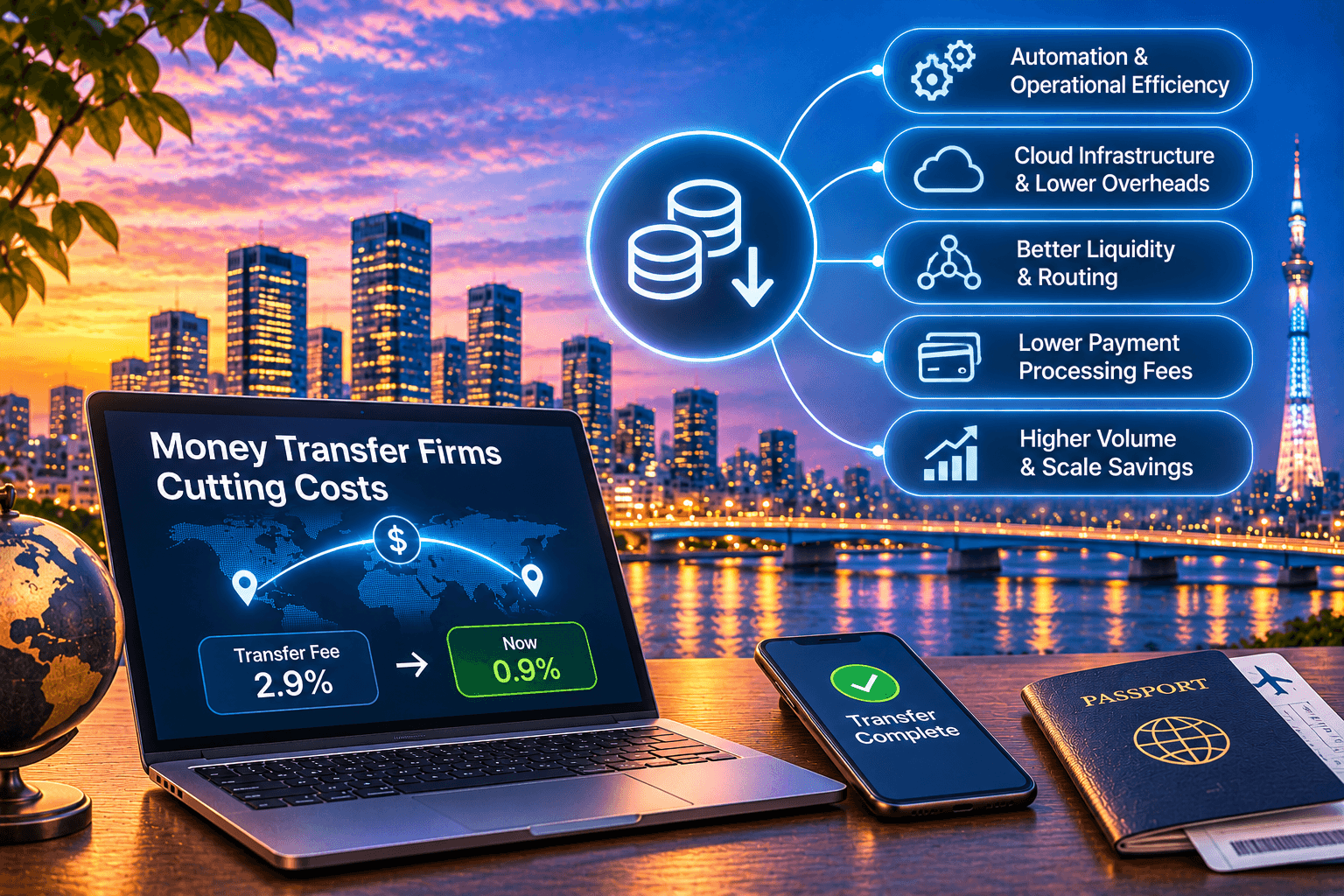
The fee on the screen is rarely the full price of sending money home. Two respondents explain why the exchange rate margin, per-corridor pricing and faster payout rails now shape remittance fees most.
Remittance fees used to mean the charge printed on the counter. Today, much of the cost sits in the exchange rate, where a wide margin can outweigh a low headline fee. Senders are learning to compare the amount that arrives, not just what they pay. As a result, money transfer firms are competing on transparency as much as price. For what else breaks when payments firms expand abroad, see our roundup on cross-border expansion.
We asked one question: what is changing fastest in the remittance market right now, and how are you keeping costs down for senders? The brief sought founders, product and corridor leads at remittance and money transfer companies. Specific corridors and fee figures were welcome, and first-hand experience mattered more than commentary. Two people answered in this round, and we used both. Neither runs a money transfer company, so we’ve set their advice against regulator and World Bank data.
The real price of remittance fees
Remittance fees are still high for most senders. Sending $200 cost 6.36% on average in the third quarter of 2025, according to World Bank data reported by African Exponent. Banks charged 14.99% on average, while digital services charged 4.59%. So the channel a sender picks often matters more than any cut to remittance fees.
The Financial Stability Board’s latest progress report, published in November 2026, points to the same weak spot. Exchange rate costs remain the main barrier to cheaper cross-border payments, FXC Intelligence reports. Also, only 67.5% of payment services now show customers cost and speed information before they pay. Therefore, many senders still cannot see the full remittance fees on a transfer.
What the rules already require
US senders have some protection on remittance fees. Providers must disclose fees, taxes, the exchange rate and the amount expected to be delivered, both before and after payment, the CFPB explains. Senders can also cancel within 30 minutes at no charge, unless the money has been collected.
Costs are changing in other ways too. Since 1 January 2026, a 1% US excise tax has applied to remittances paid for in cash, money orders or similar instruments, RSM notes. Transfers funded from a bank account or US-issued card are exempt, which pushes more senders towards digital channels with lower remittance fees.
Show what the recipient gets
Lilach Bullock is an AI implementation consultant and fractional CMO who advises businesses on pricing and marketing.
“The fastest change in remittance is that senders compare the total cost, exchange rate margin included, and keeping costs down means setting that margin per corridor instead of one flat rate. I don’t run a remittance company, so this comes from pricing advice I’ve given to entrepreneurs. Start by showing what the recipient will receive on the same screen as the fee, before the sender confirms. Publish your FX margin as a percentage over the mid-market rate and review it per corridor, because one flat margin overcharges the cheap routes and loses the competitive ones. Pick your payout route on the landed cost rather than the quote.”
Lilach Bullock, AI Implementation Consultant and Fractional CMO, Lilach Bullock
Her answer goes to the heart of how senders judge remittance fees. A transfer with a low fee can still be expensive if the rate carries a wide margin, and showing the recipient amount up front makes that margin visible. US rules already require that figure before payment, so her advice is to make it prominent, not buried. Publishing the margin over the mid-market rate goes further, since few providers state it as a percentage.
Her per-corridor point also fits the data on remittance fees. Costs range from 5.11% for the Middle East, North Africa and Pakistan to 8.46% for Sub-Saharan Africa, so one flat margin will suit few routes. However, we removed her figure for the number of entrepreneurs she has advised, which we could not verify. She does not run a remittance company, so this is pricing advice rather than corridor data.
Cut the hops between banks
Abhishek Pareek is founder and director of Coders.dev, a marketplace for outsourced software developers.
“The remittance market is moving away from the old correspondent banking model towards domestic real-time payment systems. For decades, international transfers relied on a chain of intermediary banks, each taking a fee and adding days of delay. By connecting to local instant payment networks like UPI in India or Faster Payments in the UK, usually through partner banks, platforms can remove layers of correspondent fees that pushed up costs for senders. That allows a move from high flat fees and opaque exchange rate spreads to transparent, low-margin pricing that settles in seconds rather than days.
Driving costs down further needs careful liquidity management. When settlement happens in real time, the platform must hold pre-funded accounts or credit lines in the destination corridor. Firms are moving away from old float-based revenue models towards models that put volume ahead of high margins on each transfer. The core innovation isn’t the user interface; it’s the engineering discipline needed to manage settlement risk and liquidity in real time. Replacing the middleman with automated, disciplined risk systems is one of the best ways to keep costs low while staying sustainable.”
Abhishek Pareek, Founder and Director, Coders.dev
His point explains where remittance fees build up behind the scenes. Each bank in a correspondent chain takes a fee or spread, and links to instant payment systems can remove some of those steps. The link between India’s UPI and Singapore’s PayNow expanded to 19 Indian banks in July 2025, NPCI International said, though it still runs through participating banks. Our explainer on pay by bank sets out how UPI and Faster Payments work.
However, his original answer said platforms plug directly into those systems, which overstates it, so we’ve added that this usually happens through partner banks. We also removed his claim that costs from the US to Southeast Asia had halved in three years, since we found no data to support it. He names no firm, so this is a view from the supplier side.
What works for lowering remittance fees
The two answers and the data point to a clear order of work. First, show the amount the recipient will get on the same screen as the fee, before the sender confirms. Next, publish the exchange rate margin over the mid-market rate, and review it for each corridor. Then move senders towards bank and card funding, which costs less and, in the US, avoids the 1% cash tax. Finally, connect to instant payment systems where partner banks make it practical, and plan pre-funding carefully, since it ties up cash. Together, these steps cut remittance fees without hiding cost in the rate.
What to watch next
The G20’s end-2027 targets will keep pressure on remittance fees. Watch whether the FSB updates those targets after its November report, and whether more providers publish their margins. Also watch for new links between instant payment systems in busy corridors, which could cut remittance fees further.
Above all, remittance fees fall when senders can see the whole price. Providers that show the recipient amount and price each corridor on its own will win the senders who compare.
FintechBits covers payments, banking and fintech developments for readers in the US and UK. This article is for information only and is not financial advice. Views expressed are those of the FintechBits editorial team.