NVIDIA (NVDA) looks to continue its momentum from 2024 to 2025 with a number of AI-focused announcements to CES in Las Vegas on Monday. CEO Jensen Huang took the stage during the company’s keynote, laying out his vision for everything from AI software that will power robots and self-driving cars to a new AI supercomputer that holds on your desktop.
Nvidia’s stock price rose as much as 4.7% ahead of Monday’s keynote, as Wall Street braced for the latest offerings from the AI darling. The company’s shares are up 205% in the past 12 months thanks to its prescient investments in AI hardware and its CUDA software, which allows developers to use its chips to run AI programs.
The latest announcements have focused on how programmers can take advantage of Nvidia’s existing hardware, its Hopper and Blackwell platforms. The company could launch its next-generation chip during its GTC conference in March.
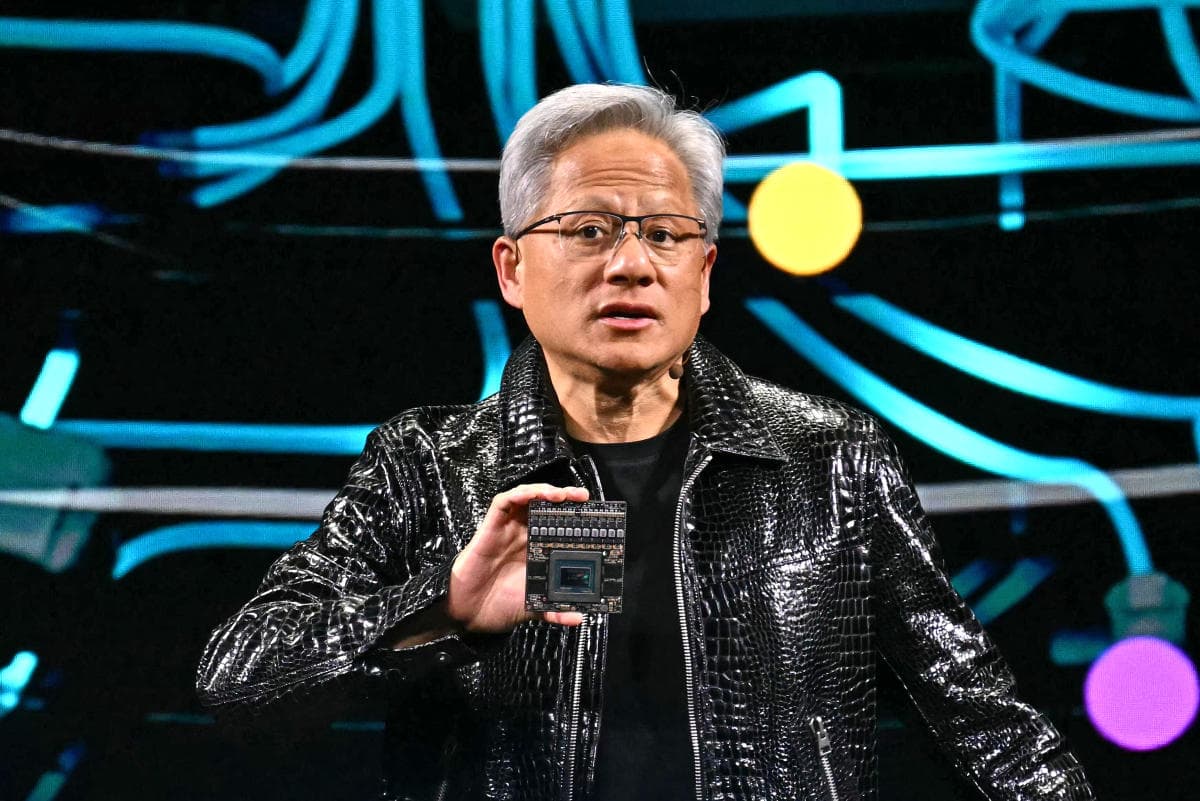
At Monday’s event, Huang demonstrated Nvidia’s latest Blackwell-based chip, the GB10 superchip. It is a miniature version of the GB200 superchip, which combines a Grace central processing unit (CPU) with two Blackwell graphics processing units (GPUs). The smaller GB10 combines a Grace CPU and a Blackwell GPU.
Nvidia says the chip will be available in a small desktop system called Project DIGITS and will come with 128GB of memory and 4TB of storage. The company says the setup is powerful enough for researchers interested in “prototyping, fine-tuning, and running large AI models.”
Project DIGITS will start at $3,000 and will be available in May from Nvidia and its OEM partners.
Beyond its new chip and desktop, Nvidia also released its openly licensed Cosmos platform for developing physical AI systems. The platform uses World Foundation Models, or WFMs, which are AI models that simulate real-world conditions. Physical AI systems include technologies such as humanoid robots and self-driving cars.
The idea is that companies use Cosmos to develop the software needed to power robots and self-driving cars, simulating various usage scenarios in a virtual environment without having to use expensive robots or put cars on the road. road in the real world.
“The ChatGPT moment for robotics is coming,” Huang said in a statement.
“Like great language models, global foundation models are fundamental to advancing robot and AV development, but not all developers have the expertise and resources to form their own,” he said. Huang explained. “We created Cosmos to democratize physical AI and put general robotics within the reach of every developer.”
In addition to Cosmos, Nvidia launched its Isaac GROOT plan for training humanoid robots. The software, which connects to Apple’s Vision Pro headset, allows a developer to perform and record the specific movements they want to teach a robot. Isaac GROOT Blueprint then takes these moves and synthesizes them, providing the robot with a huge set of moves based on the developer’s original moves.
Engineers often must teach humanoid robots to move in repetitive motions that the robot can follow and understand on its own. It’s normally a time-consuming affair, but with the Isaac GROOT plan, Nvidia says developers will be able to reduce the time it takes to create future humanoid robotic systems.
On the automotive front, Nvidia announced that Toyota will begin using the company’s DRIVE AGX Orin chip and Nvidia DriveOS operating system to power the automaker’s advanced driver assistance features in its next-generation vehicles.
Nvidia also announced that it has reached an agreement with automaker Continental and autonomous truck maker Aurora, under which the transportation companies will use Nvidia’s DRIVE hardware and DriveOS software alongside Aurora’s Level 4 autonomous driving system. called Aurora Driver. Continental and Aurora plan to put autonomous freight-carrying trucks on the roads starting in 2027.
Nvidia’s automotive and robotics segments still represent a relatively small share of its overall revenue. In the third quarter, the division brought in $449 million compared to its Data Center business, which brought in $30.8 billion of its $35.1 billion in total revenue. That said, the automotive and robotics sector is growing, with sales up 72% year-over-year during the quarter.
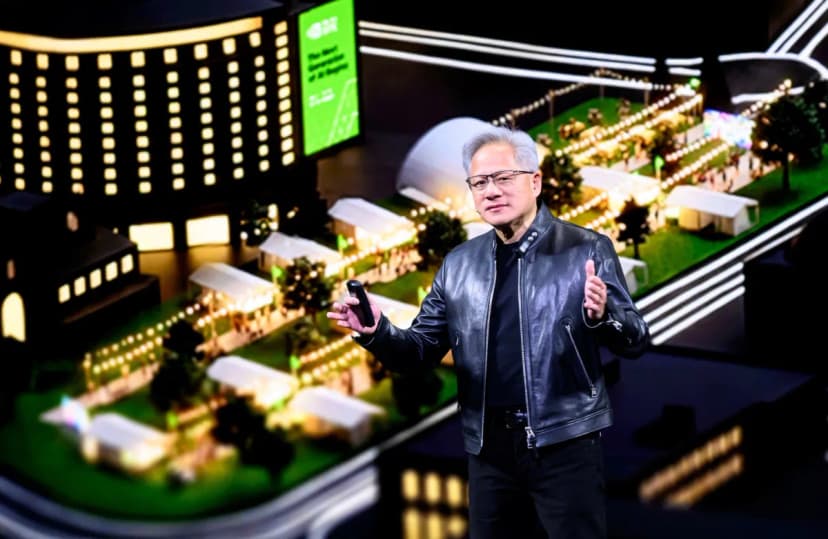
Nvidia CEO Jensen Huang speaking during the CES 2025 keynote.
Finally, Nvidia announced a number of AI software and hardware offerings, including its AI Blueprints, agentic AI applications that will allow developers to create and launch their own custom AI agents.
AI agents are specialized AI programs that can perform multi-step tasks across different applications. Companies like Google and Microsoft are betting big on AI agents as the next big thing in enterprise and consumer AI thanks to their ability to automate more mundane tasks like importing information from emails to spreadsheets.
Nvidia also said that users running its latest RTX graphics cards will now be able to run base models using its Nvidia NIM platform. Essentially, the company is enabling AI capabilities for standard graphics cards through its NIM service, which should open up wider opportunities for software developers, helping it attract more customers in the future.
Sign up for Yahoo Finance’s Week in Tech newsletter. ·Yahoo Finance
Email Daniel Howley at dhowley@yahoofinance.com. Follow him on Twitter at @DanielHowley.
Marvin Evans is a finance and fintech professional with 20 years of industry experience, including more than a decade working across the fintech sector. He is the founder of Fintech Bits and Finjobsly, and writes about fintech markets, financial technology, industry trends, innovation and the evolving fintech workforce. His analysis combines hands-on industry experience with data-led research to provide practical insight into the companies, technologies and trends shaping financial services.
 5 mins read