5 mins read
Mastercard announced on 30 September an expansion of Mastercard Agent Pay, its agentic payments program, with trust and intelligence services that show card issuers and merchants when an AI agent rather than a person started a transaction. The first service is a probability score estimating how likely it is that an AI agent initiated a given purchase, and Mastercard is rolling it out for testing in the U.S. The release names no issuer that has put the score into live authorization, so this is a product announcement with a test label on it. Mastercard describes the program at mastercard.com.
What the Mastercard Agent Pay score measures
The probability score is the first piece of what Mastercard calls the intelligence layer of its Agent Pay Trust Framework, which also covers identity, intent, controls and execution. Mastercard says it will strengthen the score with signals on behavior, merchant risk, transaction patterns, credential risk and consumer propensity, but gives no dates for any of them.
The stated goal is to help an issuer answer three questions. Does the activity fit expected patterns, does anything about the agent, merchant, credential or transaction look unusual, and should the payment be approved or challenged with extra checks? Mastercard’s example is an AI assistant that plans a trip and books the flight, hotel and transport after a single approval from the consumer. Several purchases across unrelated merchants look odd to a fraud model tuned to human habits. The Mastercard Agent Pay score is meant to give the issuer enough context to approve the legitimate booking and flag a risky one before the consumer completes it.
Who is working with Mastercard on agent trust
Mastercard names two partners for Mastercard Agent Pay. Cloudflare is working with it on privacy-preserving environments to study AI-driven payment activity, combining what Cloudflare sees of how agents behave on the web with signals from the payment network. Skyfire, which provides Know Your Agent technology for AI agent identity, verification and payments, is extending that technology into Mastercard Agent Pay so issuers and merchants can recognize trusted agents.
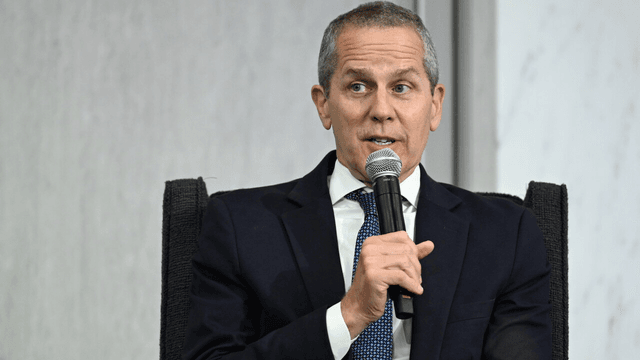
Capital One is quoted as well. Todd Kennedy, the bank’s executive vice president of Payments Strategy, says Capital One is looking forward to collaborating across the ecosystem while safeguarding consumers and merchants. That is support in principle. It does not say Capital One will use the score to approve or decline anything.
Why Mastercard Agent Pay leans on a score instead of a standard
The probability score is the most practical item in the Mastercard Agent Pay release, because issuers make approval decisions in milliseconds and need a signal they can act on more than a framework diagram. Identity standards and agent credentials tell a bank who an agent says it is. A score assumes that some agents will not identify themselves, and it does not depend on any one identity standard being adopted.
That is also where the risk sits. A score that estimates agent involvement can be wrong in two directions. A human purchase labeled as agent-led could be declined on behavior that is perfectly normal, and an agent-led fraud attempt labeled as human could pass on the old rules. Mastercard gives no accuracy figures, and a U.S. test means issuers will judge the score against their own decline and chargeback data. Javelin Strategy & Research analyst Suzanne Sando argues in the release that fraud and identity systems must learn to tell whether an agent is trusted, authorized and acting within the consumer’s intent. That supports the category more than it supports this particular score.
There is a commercial angle too. Whoever supplies the signal that decides whether an agent purchase is approved sits in the authorization path for that category, and Mastercard is positioning its network data as that signal. Fintechbits has covered agentic payment pilots that take a different route, including Cleverbridge’s agentic payment with Visa and Revolut in France and GoCardless’s first UK agentic payment for Trussell. Those start from the merchant or the bank account. Mastercard Agent Pay starts from the card network’s view of every transaction.
What the 2030 projection does and does not support
The release says one in 10 consumers is projected to routinely use agents to make purchases by 2030, and it does not name the source of that projection. The number explains why Mastercard is building the tooling before agent volume arrives: issuers that decline legitimate agent purchases will lose interchange and annoy customers, and issuers that approve fraudulent ones will absorb losses.
It does not show that agent purchasing is large, and the release offers no transaction counts. The case for the Mastercard Agent Pay score rests on a forecast. That is reasonable for an infrastructure bet, but it is a forecast.
What to Watch Next in Mastercard Agent Pay
The first marker is which issuers move the probability score from testing into live authorization, and whether any of them publish approval-rate or fraud results. One named bank with numbers would settle whether the score cuts false declines on legitimate agent purchases without opening a gap for fraud.
The second is the list of signals Mastercard has said it will add to the Mastercard Agent Pay score. Behavior, merchant risk, credential risk and consumer propensity are all named, and the order in which they arrive will show which problem issuers are asking Mastercard to solve first. The third is geography, since the release limits testing to the U.S.