Artificial Intelligence (AI) Stocks have been among the biggest market movers this year. Since the AI trend still appears to be in its early stages, it appears that a number of them could also help drive the market higher next year.
These three AI stocks, in particular, are all trading at reasonable valuations and seem like smart buys right now.
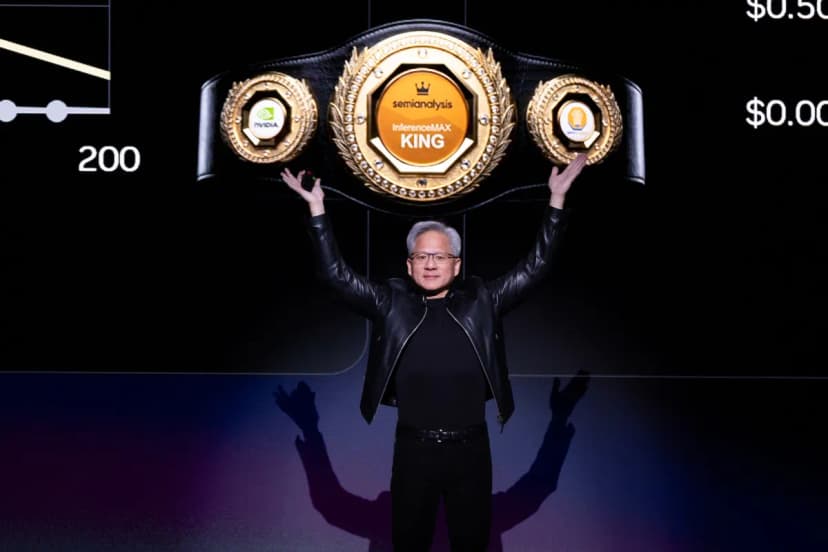
Nvidia(NASDAQ:NVDA) has been the biggest winner in building AI infrastructure, as its graphics processing units (GPUs) are the go-to chips that data centers can use for their computing needs to train extended language models (LLMs) and run AI inference. As AI models advance, they need more and more computing power. For example, xAI and Metaplatforms both used 10x more GPUs to train their latest LLMs than their previous versions.
It’s this continued need for exponentially increased computing power along with the wide gap the company has created with the help of its CUDA software platform that makes Nvidia a buy right now. CUDA was initially created to make it easier for developers to program its GPUs for uses other than accelerating graphics rendering in video games, the task for which they were originally designed. This led CUDA to become the standard platform on which developers learned to program GPUs, contributing to the gap that NVIDIA now enjoys.
With spending on AI infrastructure only expected to increase in 2025 and beyond, Nvidia still has a big opportunity ahead of it. At the same time, the stock is attractively valued with a forward price-to-earnings (P/E) ratio of around 31.5 based on analyst estimates for 2025 and a price-to-earnings-to-growth (PEG) ratio about 0.98. A stock with a positive PEG ratio less than 1 is generally considered undervalued, but growth stocks will often have PEG ratios well above 1.
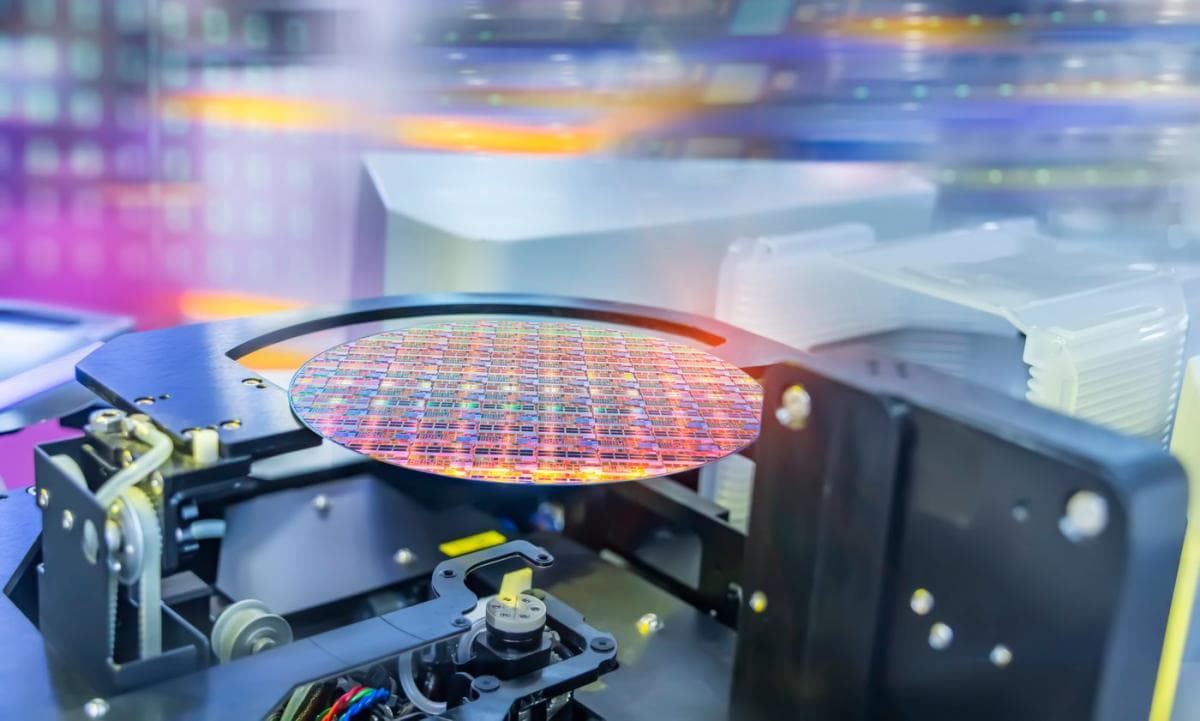
Today, many chip companies use a fabless model, meaning they design chips but then outsource manufacturing to third parties. The reasons are simple. Building chip manufacturing facilities (also called fab plants or foundries) requires a lot of capital (it costs a lot of money) and for a foundry to be profitable, it must be operated at as close to its capacity as possible. maximum capacity. Producing chips for multiple customers helps these companies keep their foundries busy. Chip manufacturing also requires a high degree of expertise and, in many cases, adaptation to the latest technologies that continue to shrink chip sizes and increase wafer sizes.
As demand for cutting-edge AI chips skyrockets, it’s no surprise that demand for foundry services has also skyrocketed – and one company has benefited more than any other: Semiconductor manufacturing in Taiwan(NYSE:TSM)or TSMC for short. Its two biggest rivals, Intel And Samsung (each of which has both a third-party foundry business and a chip design arm), have struggled, leaving TSMC to become the leading semiconductor contract manufacturer in the world, benefiting from both scale and technological advantages.
The world’s leading chipmakers are its customers, including Apple, Broadcomand Nvidia. The difficulties of its competitors also gave the company strong pricing power; TSMC is expected to raise prices again next year. This also leads to higher gross margins for the company.
Against this backdrop, TSMC appears well-positioned to remain a strong winner in AI. Meanwhile, the stock is attractively valued with a forward P/E ratio of 23 and a PEG of 1.19.
Image source: Getty Images
Alphabet(NASDAQ:GOOGL)(NASDAQ:GOOG) Cloud computing infrastructure has perhaps been the biggest beneficiary of the AI trend. Google Cloud’s revenue growth accelerated to 35% last quarter as the unit’s revenue reached $11.4 billion. This growth rate was faster than both from Amazon AWS (19%) and from Microsoft Azure (33%). But more importantly, this high-fixed-cost business has seen an inflection point in profitability. As a result, the segment’s operating profit soared. Its operating profit fell from $266 million a year ago and $1.2 billion in the second quarter to $1.95 billion in the third.
The company says its Gemini model has grown significantly and customers are using its AI platform to create and customize models. Alphabet also credits the custom AI chip it developed with Broadcom as a key differentiator, saying that using its custom TPUs (tensor processing units) in combination with GPUs reduced inference processing times by AI and reduced costs.
Additionally, earlier this month, Alphabet introduced its latest AI innovations with Veo 2, its next-generation video AI generator, and Whisk, its new AI image generator. The side-by-side test results I saw comparing Veo 2 and ChatGPT’s Sora video generator, released a few weeks earlier, were night and day, with Veo 2 vastly superior in every way. Other reviewers also hailed the Veo 2 as the clear winner. Whisk, meanwhile, also received good reviews.
Alphabet also announced its new AI model, Gemini 2, which it will integrate into its product line, including Google Search. Although some investors are concerned about the impact AI could have on Google’s search dominance, I still see a big opportunity. Currently, Google only shows ads on about 20% of its searches, but the AI insights will give it the ability to monetize searches where it didn’t show ads by attaching new ad formats to these AI responses.
Alphabet stock is also attractively valued, trading at a forward price-to-earnings ratio of less than 22. Given the size of the opportunity in front of it, this seems like a good level to buy the ‘action.
Before buying Nvidia stock, consider this:
THE Motley Fool Stock Advisor The analyst team has just identified what they think is the 10 best stocks for investors to buy now…and Nvidia wasn’t one of them. The 10 stocks selected could produce monster returns in the years to come.
Consider when Nvidia made this list on April 15, 2005…if you had invested $1,000 at the time of our recommendation, you would have $859,342!*
Equity Advisor provides investors with an easy-to-follow plan for success, including portfolio building advice, regular analyst updates, and two new stock picks each month. THEEquity Advisorthe service has more than quadrupled the return of the S&P 500 since 2002*.
John Mackey, former CEO of Whole Foods Market, an Amazon subsidiary, is a member of The Motley Fool’s board of directors. Suzanne Frey, an executive at Alphabet, is a member of The Motley Fool’s board of directors. Randi Zuckerberg, former director of market development and spokesperson for Facebook and sister of Meta Platforms CEO Mark Zuckerberg, is a member of The Motley Fool’s board of directors. Geoffrey Seiler holds positions at Alphabet. The Motley Fool holds positions and recommends Alphabet, Amazon, Apple, Intel, Meta Platforms, Microsoft, Nvidia and Taiwan Semiconductor Manufacturing. The Motley Fool recommends Broadcom and recommends the following options: long January 2026 $395 calls on Microsoft, short February 2025 $27 calls on Intel, and short January 2026 $405 calls on Microsoft. The Motley Fool has a disclosure policy.
Marvin Evans is a finance and fintech professional with 20 years of industry experience, including more than a decade working across the fintech sector. He is the founder of Fintech Bits and Finjobsly, and writes about fintech markets, financial technology, industry trends, innovation and the evolving fintech workforce. His analysis combines hands-on industry experience with data-led research to provide practical insight into the companies, technologies and trends shaping financial services.
 6 mins read